



My career has taken me across Africa, working on economic development, sustainable finance and institutional reform. But titles and portfolios have never been the point. What has mattered, from early on, is responsibility. Being entrusted to speak for others. To carry their concerns with care. To understand that representation is not about visibility, but accountability.
That lesson came early in my life. I was young when I was first asked to speak on behalf of others. I remember the weight of it. Not the fear, but the clarity. When you speak for others, your words must be grounded in truth and respect. You must listen more than you talk. That instinct has never left me.
Development begins with dignity
Later, in public service and academia, those instincts deepened. I learned that development is not abstract. It is about dignity. About equity. About whether people feel seen in the systems that shape their lives. Policies matter, but only when they translate into real change.
Rwanda is a powerful place to serve because of its focus. There is a clarity of vision here and a seriousness about inclusive progress. But even the strongest vision requires people to carry it forward. That is where volunteer service comes in: volunteerism, inclusion, co- creation and local ownership. These are often treated as concepts. I see them as practices. They show up in how decisions are made and who is invited into the room. They determine whether development becomes something done to people or something built with them.
Rwanda’s success story
In Rwanda, we see what happens when communities, institutions and partners move together. Over time, I have seen how volunteerism, embedded deliberately in national development priorities, has strengthened governance and community engagement. It has helped government institutions stay connected to the realities of the people they serve.
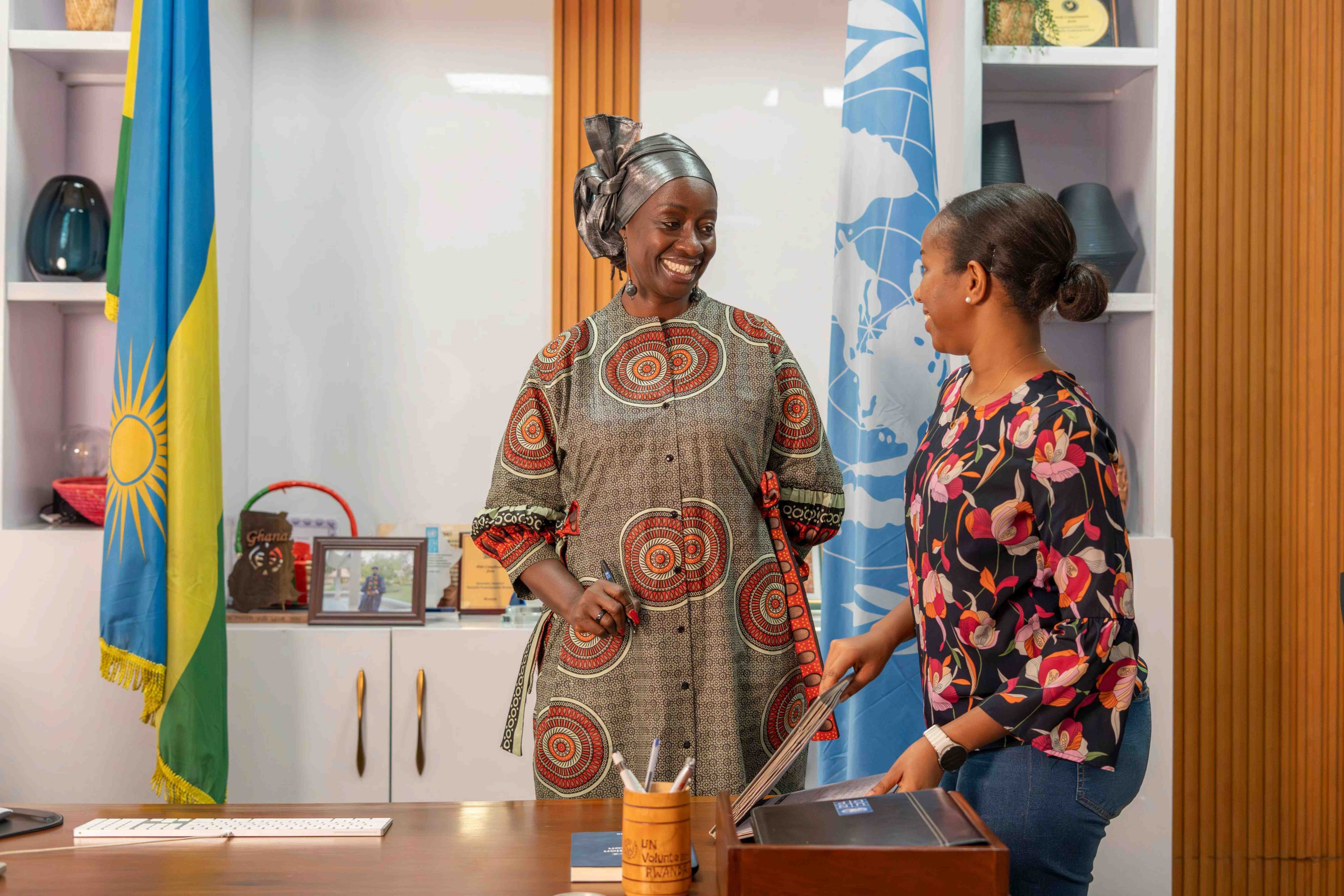
At UNDP Rwanda, the contributions of UN Volunteers often appear in the background but have been extremely essential to our work in the country. I have seen volunteers supporting innovation hubs, mentoring young entrepreneurs, organising challenges and helping ideas move from concept to practice by reinforcing it.
I have seen this too in climate-smart agriculture and rural resilience efforts. Volunteers working alongside communities. Supporting training. Following up. Staying present long after pilot projects are launched. This kind of work is quiet, but it is what allows solutions to take root and scale.
Pathways for change
These contributions are not parallel to development. They are part of the delivery chain. They bring energy, adaptability and perspective into systems that can otherwise become rigid.
For optimal results, such volunteer contributions need to be well supported and integrated into development plans. This requires intention. Not symbolic gestures, but strategic choices: placing volunteers where they build lasting capacity, creating pathways for young people to serve meaningfully and ensuring that service leads to inclusion, learning, and long-term civic contribution.
This blog is part of Journeys of Inspiration, a photobook. Many of the leaders whose stories are captured in this book began their journeys not in positions of authority, but in service—as UN Volunteers, as community activists, as individuals determined to make a difference.