



Growing up under the apartheid regime in South Africa, the systematic humiliation of black South Africans was all around us. I know many of my white South African colleagues say they did not see what was happening but for me, it was obvious. Even at school, I had already developed very strong feelings about apartheid and its lack of justification.
Driven by inner conviction
Those convictions had consequences. I was detained five times, mostly in solitary confinement. The longest period was about six months, followed by two years under house arrest. Rather than pushing you away, that experience draws you deeper into a culture of resistance. It becomes the basis of one’s stance and political position. I think you have to be motivated by your own moral inclinations, not by some abstract sense of “doing the right thing.” When you go to jail, you have to ask yourself why you are there. Are you simply living up to other people’s expectations or moral guidance? Or is it something inside you - an inner conviction that justifies what you are going through?
The law as a tool for justice
Law became an important tool for me. It allows you to engage with people as they go about the business not only of their own lives, but of protecting and strengthening the lives of large numbers of people - those living in townships, those working in trade unions and those trying to secure organizational rights. These were the rights that mattered and they ultimately affected the balance of power in South Africa. They compelled both sides to recognize that they had to find a new way of living together. South Africa went through a major earthquake in its legal foundations during that time. It was an exciting period establishing a new legal order based on human rights, and a new approach to political and civil liberties.
Navigating complexity with compassion
Later, working in conflict-affected contexts such as Afghanistan, and through my work with the United Nations, one cannot help but be struck by the enormity of the challenge countries face in trying to bring their people together. Many of my colleagues paid the ultimate price. Looking back, it does beg difficult questions: what required the international community to make such an effort, and why did it sometimes seem to come to so little?
But the answer lies in the effort itself. Because trying matters. Standing with people in their most vulnerable moments matters. Peace is not a guarantee. It is a choice, made daily by individuals, communities, and nations.
In South Sudan today, the focus is very much on the protection of civilians, and on the imminent danger faced by hundreds of thousands of South Sudanese particularly if the country were to erupt into civil war for a third time in less than a decade. Our task is to help create a common platform where all South Sudanese can come together and craft arrangements for living together, notwithstanding the terrible fault lines exposed by those conflicts.
Volunteerism: a moral imperative
In this context, volunteering is a very important option, particularly through the United Nations Volunteers, but also in the broader sense. It is about engaging with the United Nations in giving expression to the values of the UN Charter as a voluntary act. It is not simply a search for employment or a way of filling out a career, but a decision to say: I want to make my contribution to world peace. In our mission, volunteers are indispensable. I genuinely don’t think we could do our work effectively without them.
A fractured world needs moral leadership
We are operating at a time when the international consensus on living peacefully and harmoniously together no longer exists in the way it did 10 or 20 years ago. The influence that the international community once had in conflict settings has dissipated. Mediation has become harder, and it is more difficult for the United Nations to secure the objectives we set ourselves.
But if we surrender to cynicism, we lose more than diplomatic influence. We lose our shared humanity. That’s why I believe in doing something for others. Because in doing so, you are also doing something for yourself. You grow. You learn. You reaffirm your place in a wider human story. Ultimately, the work we do is truly rewarding. It affirms the importance of standing with others, even in the most difficult circumstances, and of continuing to choose engagement, service, and peace.
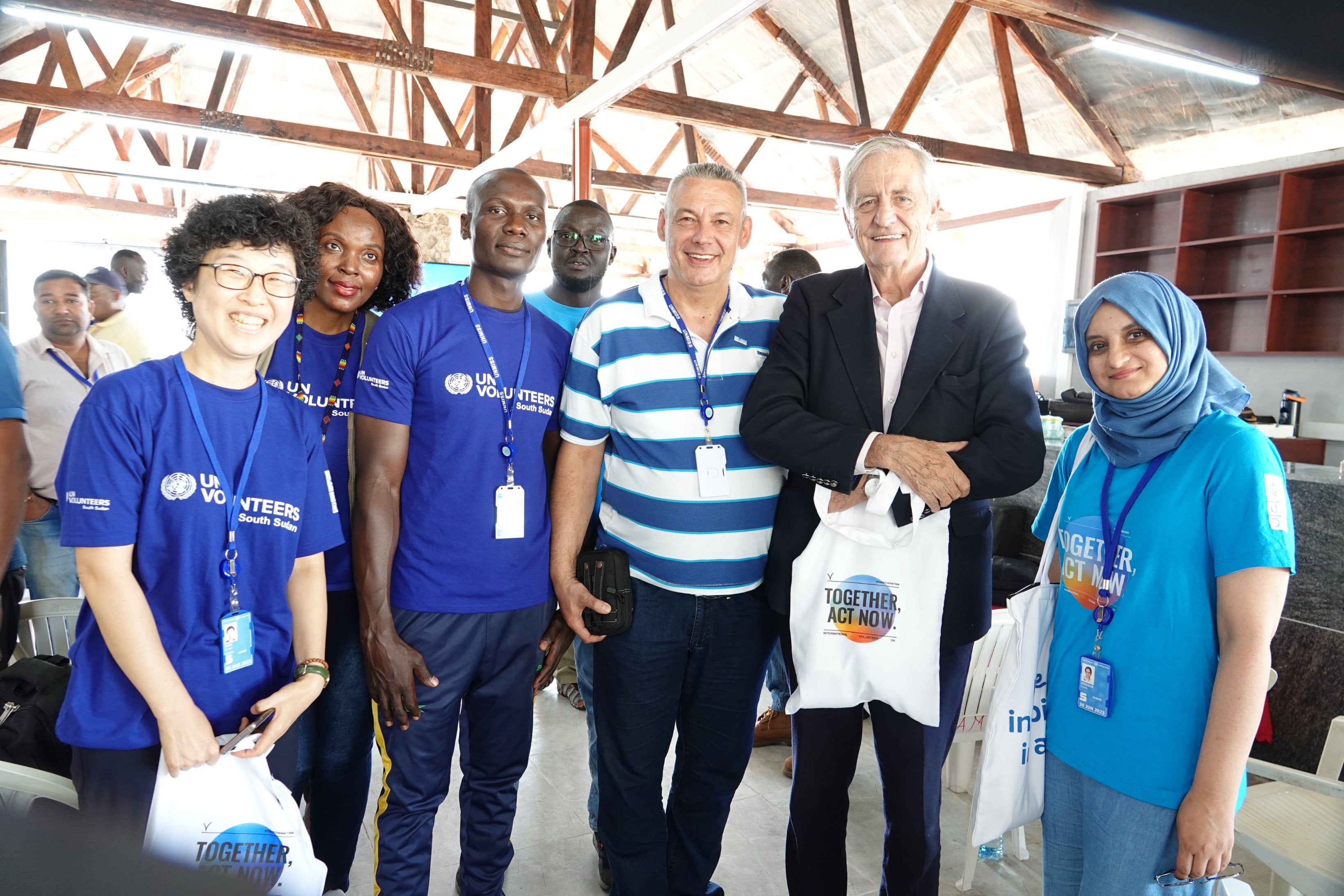
The blog was adapted near verbatim from a video message by Nicholas Haysom on International Volunteer Day and has been published posthumously.
This blog is part of Journeys of Inspiration, a photobook. Many of the leaders whose stories are captured in this book began their journeys not in positions of authority, but in service—as UN Volunteers, as community activists, as individuals determined to make a difference.