



My story has always been threaded through the idea of service. My grandfather signed the United Nations (UN) Charter in 1945 as Egypt’s Foreign Minister and later became a judge at the International Court of Justice. My father negotiated borders between Egypt and Israel and represented my country at the United Nations. That lineage was not a trophy to display. It was a responsibility that pushed me to show up, to do more than I had been given.
Troubled beginnings
My own entry into the UN was as a young tour guide at the UN Headquarters in New York. This opportunity opened a window into a vast and complex institution. Explaining the UN to visitors from around the world helped me see it from the inside – its energy, complexity and extraordinary potential. That experience set me on the path to UNDP.
The path was not straightforward by any stretch. My first international assignment as a Junior Professional Officer was made possible through a generous contribution from the Dutch Government, for which I will forever be indebted. But this funding ended rather abruptly and prematurely, leaving me in Indonesia without a job or plan. I survived by teaching squash and coaching the national team until a short consultancy turned into a series of contracts. About six years later, I landed my first fixed-term staff post. Those early years taught me resilience and a lesson I still carry: perseverance and purpose matter more than titles.
The power of volunteers
That same belief would guide me years later in South Africa where I saw purpose come alive through the UNV Doctors programme in Limpopo, a rural province in South Africa that then faced severe shortages of medical professionals and high maternal and child mortality.
Through UNV, volunteer doctors from several countries brought skills in surgery, anaesthesia, family medicine and other specialties to hospitals that had gone months without specialists. Their presence meant shorter hospital waiting times, safer deliveries and the return of crucial services like surgery and obstetrics to district hospitals.
These doctors worked long hours under tough conditions, becoming the only specialists in some facilities and instilling a stronger work ethic among local staff. I remember speaking with these doctors about the tough conditions in which they operated and the sacrifices they made on a daily basis to save lives.
In those moments, I saw how the commitment of a few could ripple outward, protecting thousands. The volunteers were not simply supporting our work, they were leading it, carrying the UN flag into underserved communities and strengthening trust in the UN’s role in improving and improving people’s lives.
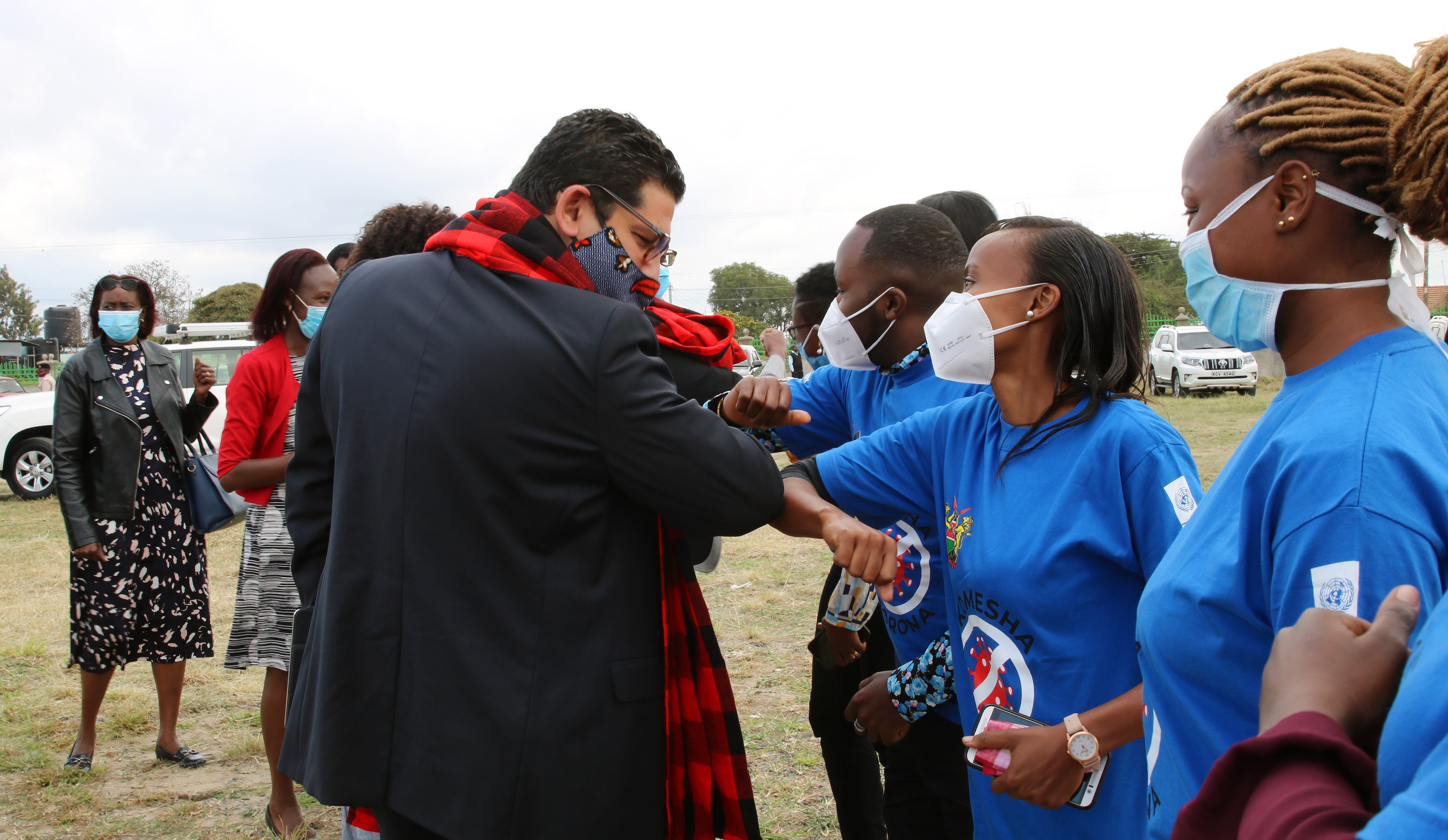
In Kenya, where I served as UNDP Resident Representative, the challenge was different. COVID-19 swept across the country and exposed fault-lines across various sectors. Volunteers embodied our response: filling gaps in health services across the country, driving digital innovations through the UNDP Accelerator Lab and supporting socioeconomic recovery. Many were young Kenyans whose energy turned plans into action, ensuring vulnerable groups accessed services and helping communities navigate the crisis. I will never forget watching buses depart with young doctors and health workers heading to distant counties. They carried more than protective gear—they carried hope in dark times, filling important gaps and bringing life-saving services to the hardest-hit communities.
These experiences deepened my belief in building adaptable teams, embedding youth and volunteers into development responses and designing programmes with the humility to listen and the courage to change.
Development anchored in people
Today, in my role at UNDP’s Bureau for External Relations and Advocacy, I carry these lessons forward. Strategy and policy matter, but they must be anchored in people—and volunteers often show us how. They embody resilience, adaptability and courage—qualities I have sought to cultivate in my own journey, shaped by both privilege and struggle.
This blog is part of Journeys of Inspiration, a photobook. Many of the leaders whose stories are captured in this book began their journeys not in positions of authority, but in service—as UN Volunteers, as community activists, as individuals determined to make a difference.