



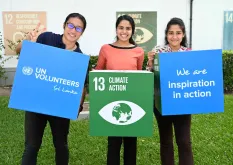
“Volunteering is my way of giving back. It allows me to be a bridge between cultures, people, and knowledge.” says Akinori Miyomoto. While Tharinduni Waththuhewage shares, “Volunteering is about creating space for others to thrive. Every small action matters when it uplifts a community.” And for Sayumi Jayawardene, “Impact isn’t always loud or immediate. It’s in the systems we change and the futures we shape.” These voices echo across Sri Lanka, where UN Volunteers with the United Nations Development Programme's Climate and Environment are not only promoting environmental sustainability but also gender equality. Let's hear more about their volunteer actions.
Fully Funded UN Volunteer from Japan, Akinori Miyamoto, a Project Specialist, connects smallholder farmers to market techniques. He coordinates the Smallholder Horticulture Empowerment and Promotion (SHEP) Training of Trainers, which helps farmers shift from traditional crops to those in high market demand. Through SHEP, farmers learn how markets operate and what buyers expect. They also receive business and gender awareness training to encourage shared decision-making within households and communities.
By preparing crop calendars and selecting high-demand produce, farmers make important decisions for their futures. The project aligns with Sri Lanka's Nationally Determined Contributions and builds on UNDP's climate and energy efforts.
Tharinduni Waththuhewage makes sure that Sri Lanka’s green transition is inclusive. She is a UN Volunteer Specialist and supports women smallholder farmers to adopt renewable energy-driven agriculture in Monaragala, Nuwara Eliya, and Hambantota, the climate-vulnerable districts. In her Technical and Administrative Coordinator role, she handles procurement and various technical details.
One of the project’s innovations is the Community Agro-Tech Farm, a model that integrates solar-powered irrigation, automated polytunnels, mushroom cultivation, and eco-friendly sales outlets.
Powered by solar mini-grids and rainwater harvesting systems, the farm is expected to benefit over 1,000 community members, especially women.
Representing the youth, Sayumi Jayawardene, a UN Volunteer Project Assistant, contributes to initiatives like the Biodiversity Finance Initiative (BIOFIN). Launched by UNDP and active in over 130 countries, BIOFIN helps governments assess their biodiversity financing needs, identify gaps, and develop practical solutions. Sayumi also supports Early Action Support to the Global Biodiversity Framework and the National Biodiversity Strategic Action Plan. She coordinates national consultations and compiles reports on project outcomes. She also uses facts and data to guide how money is spent on climate-related issues.
In Sri Lanka, farming isn’t just work—it’s how people feed their families, earn a living, and stay connected to their traditions. But climate change is throwing everything off balance. Droughts drag on, floods hit without warning, and farmers are left fighting to save their crops and income. With over half the country relying on agriculture, the pressure couldn’t be higher.
That’s why volunteer assignments of Akinori, Tharinduni, and Sayumi are powerful examples of how international and national talent can collaborate closely with local communities to protect what matters most—people, land and future.