



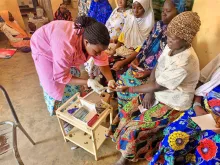
In Burkina Faso, conflict has forced over two million people from their homes—one in ten citizens. With nearly a third of health facilities shut down, women and girls are giving birth without safe care. To help, the United Nations Population Fund (UNFPA) and the United Nations Volunteers (UNV) sent 25 national UN Volunteer midwives to five regions hit hardest by violence. In just two months, they delivered over 1,400 babies, provided 2,700 prenatal checkups, and treated 200 emergency complications.
Among them are Agathe Ouoba in Diapaga and Élodie Toe in Titao—midwives saving lives and restoring dignity where it’s needed most.
Abandoning is not an option: In Diapaga, in the eastern Tapoa region, Agathe Ouoba is a midwife on the front lines. In May 2025, gunfire hit the town and shut down the health center. But life kept moving. “We were told to stay home,” Agathe says. “Women still went into labour. We helped one mother deliver at home using just a single-use ventouse. She and her baby made it.”
Agathe provides prenatal checkups, postnatal care, family planning, and support for survivors of violence. She runs awareness sessions that are changing lives: more women now take malaria prevention, use contraceptives to space births, and choose safer deliveries at health centers. Maternal deaths are dropping.
Volunteering has changed Agathe. She’s building her skills through online courses on the UNV e-campus—training she hopes will shape her future long after this assignment.
“After the May 2025 attack in Diapaga, when the health center had to close, Agathe and her fellow volunteers did not abandon their patients. They stepped in to assist home deliveries and even treated a young woman who had been injured by a stray bullet.” Diapaga's District Medical Officer.
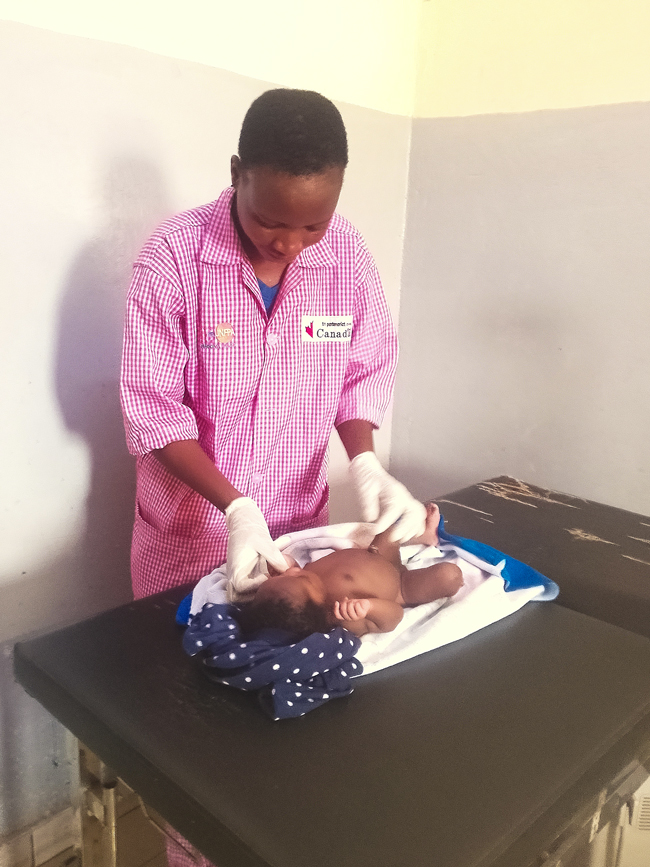
Pushing beyond limits: Hundreds of kilometers in northern Burkina Faso's Loroum province, Élodie Toe works in Titao, a town cut off by conflict. Supplies are low. Roads are dangerous. But the need for maternal care never stops. Élodie delivers babies, checks on mothers before and after birth, and teaches families about hygiene, nutrition, and family planning. She also trains local health workers so they can keep helping their communities.
When medical supplies run out, she makes do with basic kits and quick thinking. Once, with no doctor around, Élodie handled a life-threatening birth on her own. It pushed her limits—but saved a life.
“Thanks to Élodie’s quick intervention, a woman in obstructed labour received life-saving care. Without her, the outcome could have been bad.” Sigué Moustapha, Head Nurse, Primary Health Center of Titao.
Delivering life—Volunteer midwives in action
More women are choosing to give birth at health centers—places where safety and care are now within reach. Local health workers are stepping up with greater confidence, handling complex cases that once seemed out of reach. Agathe and Élodie prove that even in conflict zones, care doesn’t stop. In a country where violence has shut so many doors, these midwives keep one open: the right to give birth safely, with dignity.