



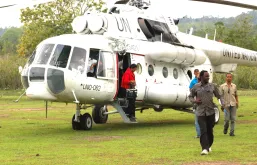
The wheels of the dark grey Australian military aircraft kissed the tarmac—no, slammed it—sending a tremor through the ground. A shudder rippled outward, kicking up a furious halo of dust. The aircraft, all muscle and menace, rumbled to a halt beneath the brown cloud, its fuselage gleaming like a predator freshly landed in hostile territory. “Welcome to East Timor,” blurted out Paul Guering, an Irishman and United Nations Volunteer (UNV) official, as the scorching heat of Dili, the capital greeted us on a sunny afternoon in late June 1999. Paul was overseeing the deployment of the first batch of UN Volunteers from a temporary staging base in Darwin, Australia, to East Timor. Nearly 100 of us were on that plane, a motley crew of veteran UN peacekeepers, civilian police officers, and bright-eyed volunteers from across the globe.
We had all answered the call to serve in the historic United Nations Assistance Mission in East Timor (UNAMET), a political mission, established by the UN Security Council on June 11, 1999. Our task: to help organize and conduct a UN-sponsored referendum in which the Timorese people would vote on whether to remain under Indonesian autonomy or pursue full independence.
I’d just been swept out of the buzzing newsroom at The Standard in Nairobi, where I was reporting fresh out of the University of Nairobi’s School of Journalism, class of ’96. When Garry Gehyigon, the Kenyan head of UNV at the time, confirmed my appointment as a UN Volunteer Electoral Affairs Officer, I kept scratching my palms, trying to convince myself it wasn’t a dream.
At the time, it was mostly the allure of international travel and the thrill of adventure that captured my imagination. Australia, East Timor—far-flung names that stirred my curiosity, igniting an adrenaline rush of the exotic and the unknown.
Growing up in the remote, though vibrant, tropical sunbaked Igoji rural suburb, located on the western slopes of Mount Kenya, we knew Australia only from geography books—and, of course, kangaroos. Now, finally, I was going to see kangaroos with my own eyes.
I was assigned to the remote village of Nibin in the Oecusse enclave—an isolated pocket of East Timor surrounded by Indonesian West Timor. Our team of five included a South Korean civilian police officer, a Timorese driver, an interpreter, and two electoral affairs officers.
We were part of a 400-strong UNV contingent scattered across the island, each team tasked with delivering civic education and preparing the population for the referendum, scheduled for 30 August 1999.
The mission was anything but easy. Reaching remote villages was a logistical nightmare—crumbling roads, limited transport options, and a rugged landscape that tested our endurance daily. Language barriers added complexity. While Tetum was the local language, Bahasa Indonesia and Portuguese were also widely spoken. Our interpreters became our bridge—carrying our message, word by word, across cultural and linguistic divides.
The gravest challenge—our unspoken fear was security. Militia groups linked to Indonesia were determined to sabotage the independence process through terror. Villagers faced threats, and violence hung over us like a storm cloud. After East Timor’s decisive vote for independence, chaos erupted—over 1,500 people were killed and nearly half a million forced from their homes.
That moment altered the course of my life forever. It compelled me to pivot toward a career in peacekeeping and dedicate myself to advancing global peace, human rights, and security.
As fate would have it, I was selected to continue serving under the United Nations Transitional Administration in East Timor (UNTAET), established in October 1999. Our task was to help administer East Timor’s transition to full independence. I immersed myself in the culture and language—eventually becoming fluent in Tetum.
Looking back, my early UNV experience at just 28 years old was transformative. It opened doors I never imagined. I later earned a scholarship to pursue a master’s degree in peace studies at the University of Notre Dame in Indiana. My journey continued with assignments in Eritrea, Ethiopia, and Zimbabwe, and later with the Catholic Relief Services, where I served as a technical adviser for a global programme focused on social cohesion and justice integration across Africa, Asia, and Latin America.
Many of my fellow UNV colleagues from East Timor followed similar paths. Some joined the UN system permanently. In contrast, others rose to leadership in academia, government, civil society, and the private sector in their home countries.
The ethos of UNV—volunteerism grounded in service, selflessness, and a deep commitment to community—is something I carry with me to this day. I encourage young professionals to embrace these values. Volunteerism is not only a powerful form of active citizenship, but—as my story shows—a path to profound personal and professional transformation.
As we navigate uncharted territory in international development—marked by the scaling back of major initiatives that once financed life-saving work around the globe, volunteerism remains a vital platform. It offers professionals a chance to apply their skills where they’re needed most, bridging critical gaps in services and support.
In a world of growing uncertainty, volunteering allows us to make a tangible difference—one day, one act, one life at a time.
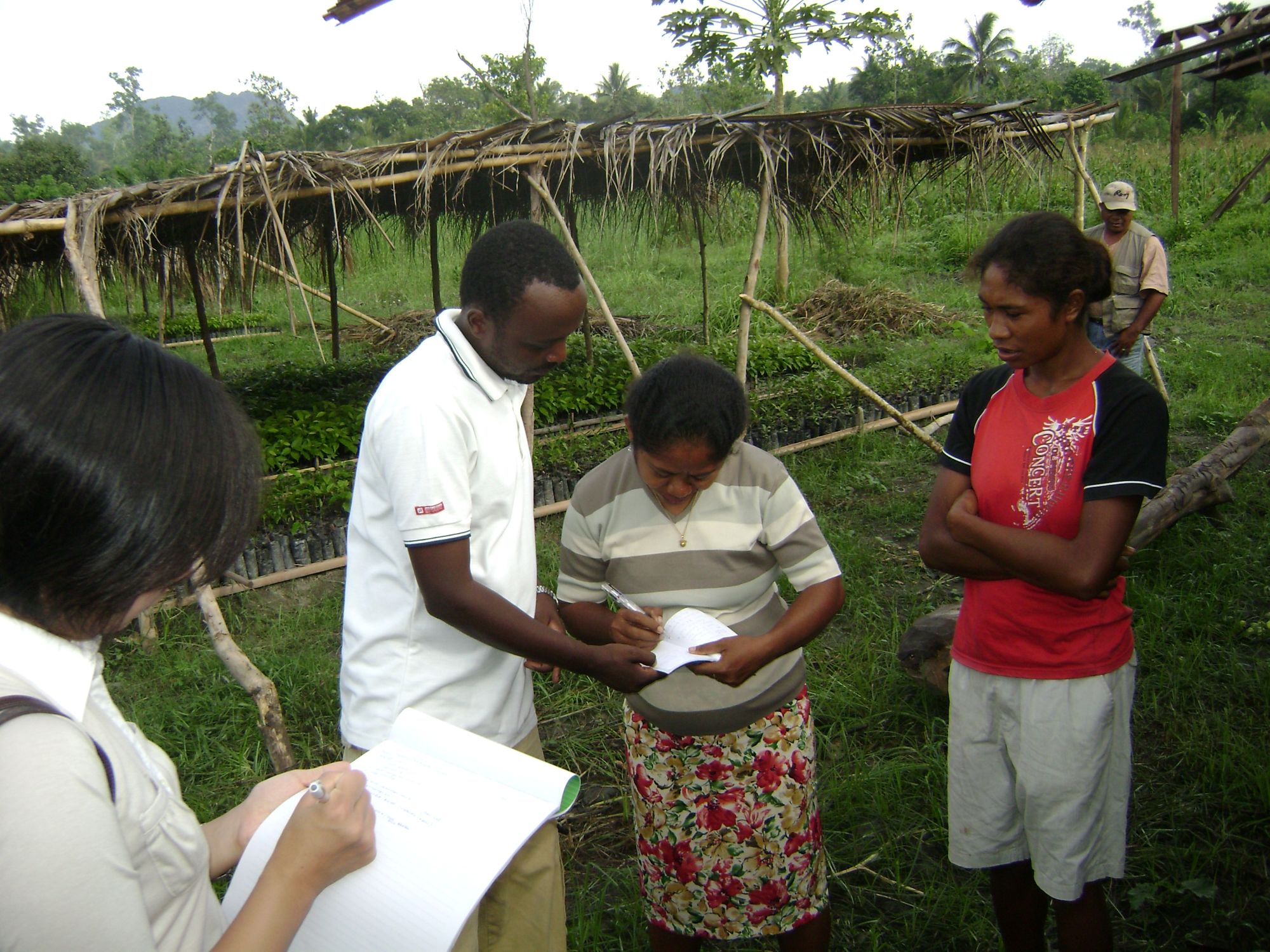
Sammy Mwiti is currently based in Bonn, Germany, where he serves as a Senior Adviser with the Initiative for Climate Action Transparency, hosted by UNOPS. He has served as a UN Volunteer with UNAMET and UNTAET in East Timor, and with UNDP in Timor-Leste.