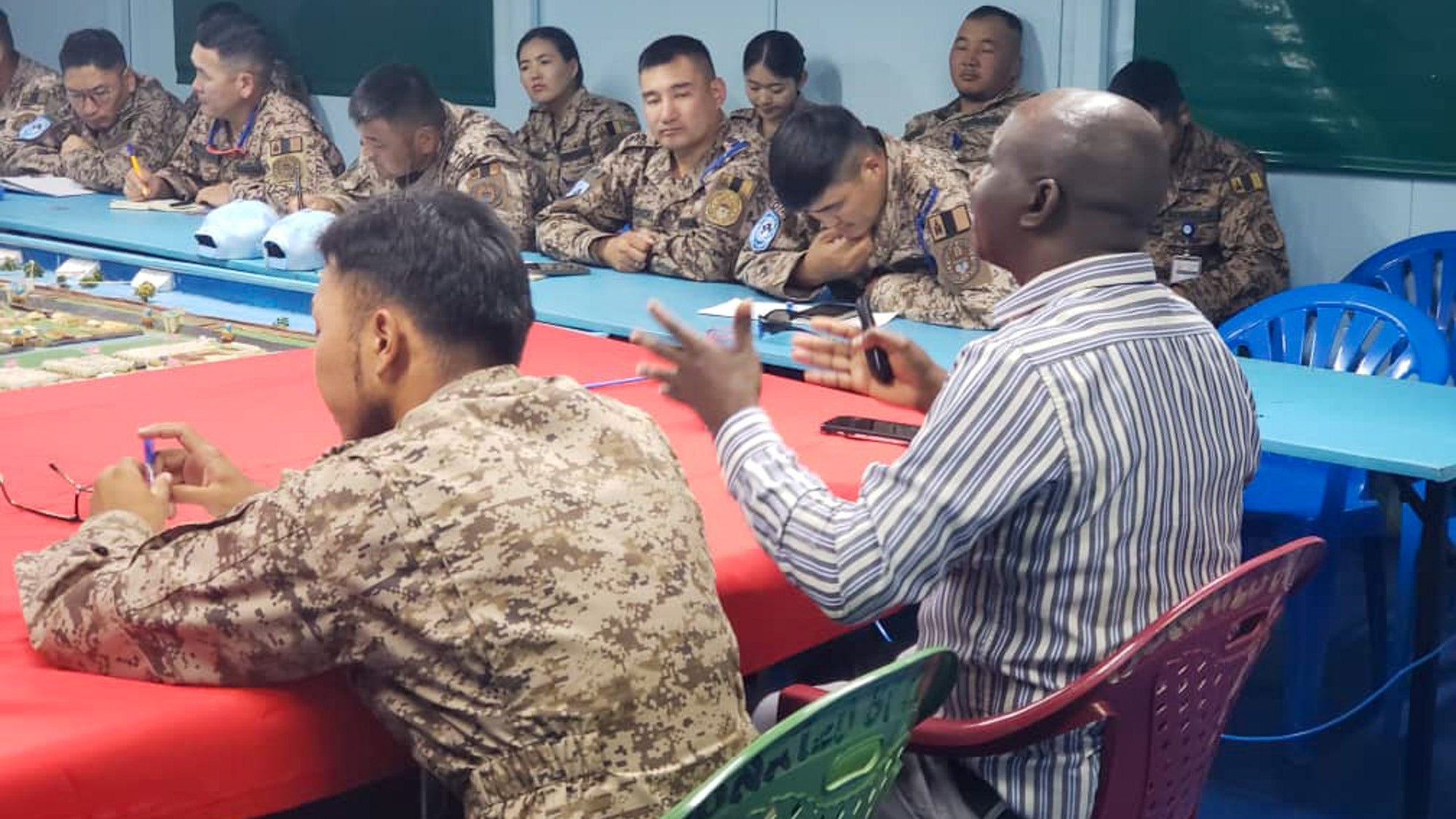
When flights to Panyijiar County stop because of flooding, Morris Charumbira has to keep moving. The UN Volunteer Civil Affairs Officer, originally from Zimbabwe, serves with the United Nations Mission in South Sudan (UNMISS). Over the years, he has built relationships across southern Unity State that keep information flowing and conversations alive, even when floodwaters swallow the roads and ground the planes.
Panyijiar is the southernmost county in Unity State, sitting on its lowest ground, so flights there are often cancelled due to changing weather conditions. But the concerns facing its communities do not pause for the weather: people still need to share what they know about security, flooding, and whether aid workers and supplies can get through.
When a visiting team cannot travel, relationships become the way in.
Civil Affairs Officers like Morris are civilians who work closely with communities and local leaders. They listen to people, monitor local tensions, and help find peaceful ways to settle disagreements.
For Morris, that means staying in touch with traditional chiefs, government officials, religious leaders, women, and young people. Each person he talks to sees things a little differently, and together their perspectives help him understand what is happening even in places the team cannot reach.
That network mattered when he helped organize the Greater Panyijiar intercommunal peace dialogue in Ganyliel, which brought people from different communities together to talk through their concerns and look for a peaceful way forward. Access challenges meant the meeting could not be held in one place; some participants joined online while others met in person, and the conversation continued through a mix of both.
He coordinated the dialogue with local peace partners, including the Assistance Mission for Africa (AMA) and the International Rescue Committee (IRC). Both organizations are part of a group of partners funded by the Reconciliation, Stabilization and Resilience Trust Fund, which also financed the dialogue.
It was AMA and IRC's presence and knowledge on the ground that let the work continue when the UNMISS team could not travel.
The biggest lesson from this has been the importance of collaboration between UNMISS and peace partners,” shares Morris.
The result was simple but important: distance did not end the conversation.
Ganyliel is only one stop on Morris's journey. Across Leer and Mayendit counties, he has helped bring people together to talk about experiences many would rather forget. In reconciliation sessions, survivors, community leaders and neighbours confront painful truths, not to reopen old wounds, but to prevent new ones.
In Leer County, he has also supported sports activities that give young people a rare chance to meet across divides and imagine a future shaped by cooperation rather than conflict.
Much of Morris's work is invisible. It happens in notebooks, phone calls and follow-up conversations that few people ever see. But when a concern raised in a village reaches decision-makers, when a promise made in a meeting is remembered months later, or when a simmering dispute is addressed before it escalates, the impact becomes clear.
Peace is not built only in grand negotiations. Often, it survives because someone is paying attention.
Morris has spent more than ten years working with communities in South Sudan, and says the assignment still teaches him something new.
Listening to people at the community level has shown me how conflict shapes daily life, and how communities can work through their disagreements together when they are given the space to do so," he says.
It has also shown him the value of hearing a different opinion, and he says peaceful coexistence begins when people accept that others may see the same situation differently, and choose to keep listening anyway.
Whatever the floodwater does to the roads and the runways, that work continues.
Because the most important road in southern Unity State is not made of asphalt. It is built on trust, and it remains open long after the floods arrive.