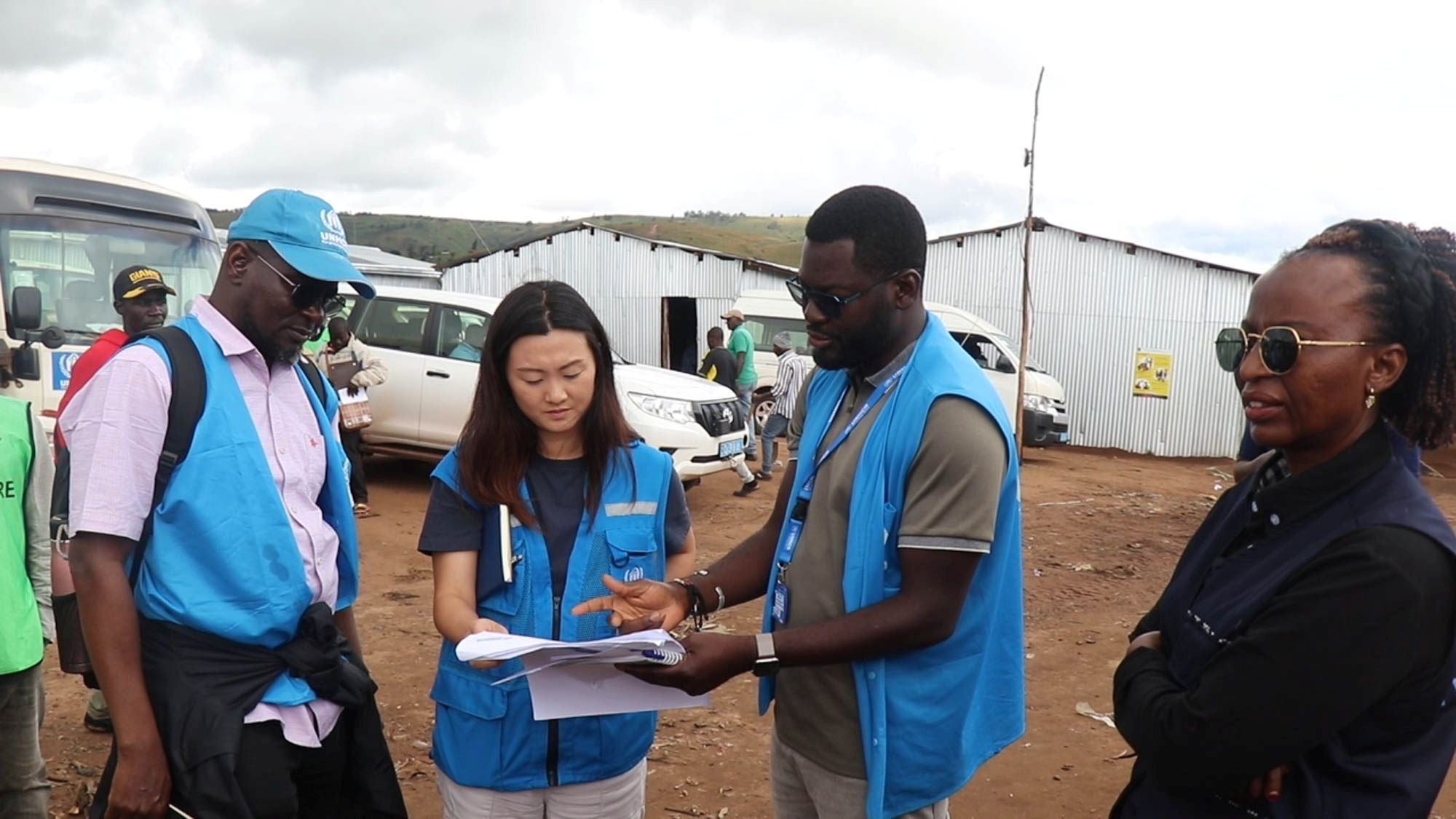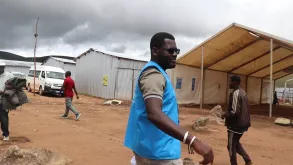
After days, sometimes weeks, of fleeing violence in the Democratic Republic of the Congo (DRC), families arrive at Busuma refugee site carrying what little they could save. Children fall asleep on mats laid on bare ground. Parents stay awake, listening to the wind and wondering what tomorrow will bring. In those moments, something as simple as a roof can mean everything. A shelter cannot erase what has been lost. But it can offer a family a place to close a door, protect their children from the rain, and take the first breath of safety in a long time.
For the more than 66,000 Congolese refugees hosted at Busuma in eastern Burundi, that need remains urgent. As new arrivals continue to cross the border and others return home, the population shifts constantly. Yet one reality endures: every family deserves a place to begin again.
Behind each shelter stands a series of decisions that most people will never see.
Where should it be built? Will it withstand the next storm? Can it provide dignity as well as protection?
Making some of those decisions is part of the work of Ismael Ouedraogo, a civil engineer from Burkina Faso serving as an international UN Volunteer Associate Shelter Officer with the United Nations Refugee Agency (UNHCR) in Burundi since September 2022.
Busuma is located in the Kayongozi area of Ruyigi commune, Buhumuza province. As of 30 April 2026, UNHCR reported that 66,700 Congolese refugees were hosted at the site. Movements have continued, including voluntary and spontaneous returns to the DRC. The need for adequate shelter, however, remains acute.
Ismael explains, "At the beginning, they had nothing. Shelter was the most urgent need. Seeing that some families are better protected today, thanks to our work, is a real source of pride."
Ismael's assignment includes coordinating, planning and supervising the construction of shelters and community infrastructure in refugee camps, sites and transit locations. "I have always had the desire to serve others, especially those fleeing conflicts and natural disasters. I wanted to use my technical skills to benefit these people, and United Nations volunteering was the most appropriate framework to make this ambition a reality," he says.
The work, however, extends beyond family shelters. UNHCR and its partners also support community infrastructure, including schools and health facilities. These shared spaces connect shelter to education, health and a more organized humanitarian response.
Every shelter given to a refugee represents a life protected. Seeing people smile because they finally have a roof over their heads, seeing them safe from the cold—that is what impacts me the most," shares Ismael.
Yet the scale of the emergency makes that protection difficult to deliver. UNHCR notes that more than 60 percent of the Congolese refugees at Busuma lacked access to adequate shelter. Roads and drainage channels were also deteriorating, complicating access and placing parts of the site's infrastructure at risk. The figures show both the progress made and the distance still to go.
We are asked to act quickly while doing things properly. In emergencies, it is never simple for an engineer, but we must show flexibility and continuously adapt," Ismael explains.
Ismael knows that in a refugee settlement, a poorly placed beam or rushed decision can become much more than a construction problem. It can affect a family's safety, dignity and chance to rebuild. Every day, he works with colleagues, supervisors and partners to answer a difficult question: when stakes are high and resources limited, what can be done now, and what cannot wait? In that space between pressure and responsibility, technical decisions become human ones.
For Ismael, volunteering is exactly about that challenge: bringing professional expertise where it matters most, while learning from the resilience, ingenuity and strength of the communities he serves. "UN Volunteer assignments are based on skills, and it is a real pathway to long-term engagement in the humanitarian sector."
The work is far from over. People continue to arrive, needs continue to grow, and humanitarian resources remain under strain. Yet every shelter completed strengthens more than a single household. It helps communities withstand displacement, supports a more coordinated humanitarian response, and creates the conditions for recovery and resilience to take root.
At the camp, every blueprint carries a human story—every construction site a family waiting to start over.
Because in a refugee crisis, a roof is never just a roof. It is the first line of protection, the foundation of dignity, and often the first sign that a better future is still within reach.