



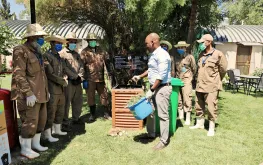
Efforts matter. Actions, no matter how small, count. A message from Khalid Badr, who is making the United Nations Assistance Mission in Afghanistan (UNAMA) greener. How does he do that? By improving how waste is managed in UN compounds. In Afghanistan, where conflict and climate change threaten already fragile ecosystems, sustainable solutions are urgently needed. Since March 2022, Khalid, an Environmental Engineer from Sudan and UN Volunteer with UNAMA has been working towards reducing the mission’s environmental footprint.
Khalid's efforts align with global best practices and support the Sustainable Development Goals—especially SDG 12 on responsible consumption and production, and SDG 15 on protecting life on land.
In his volunteer assignment as an Environmental Officer, he has successfully included sustainability into the culture at UNAMA—treating it not just as a target, but as a way of thinking.
Guided by the motto “Use it up, wear it out, make it do, and do without,” staff are encouraged to reduce, reuse, and repurpose materials.
Color-coded bins make waste separation easy, while on-site composting turns organic waste into nutrient-rich soil for greening UNAMA facilities—cutting landfill use and emissions. Single-use plastics are being phased out in favour of sustainable alternatives, influencing the habits of over 2,500 personnel. And partnerships with Afghan recyclers ensure materials like glass and metal are processed locally, supporting the economy and promoting circular solutions to climate risks.
Working in Afghanistan isn’t easy—there are security issues, limited infrastructure, and not everyone is on board with change. Behavioural shifts like waste segregation often face skepticism or even ridicule. But Khalid tackles these head-on: building trust, delivering sharp, targeted training, and using every tool in the box—from visual guides and written materials to hands-on demos and clear verbal instructions.
Khalid sees even more potential: expanding composting, growing local partnerships, and making UNAMA’s operations more climate-friendly. Volunteering has deepened his cultural awareness and sharpened his skills. He calls himself a changemaker and believes that when people come together, big changes are possible.
To those passionate about global change but feeling disconnected from institutions like the UN, Khalid offers this message: “Your efforts matter. Every action, no matter how small, contributes to a greater impact. Volunteers like myself prove that committed individuals can drive systemic change, even amidst challenges like funding cuts, operational constraints, and the growing impacts of climate change.”