



What happens when you travel halfway around the world to change lives and end up changing your own?
For Runnan Shao and Shinya Abe, the answer unfolded in Malawi. Arriving from different corners of Asia as international UN Volunteers with the World Food Programme (WFP) and the International Organization for Migration (IOM), both came ready to contribute their expertise. Instead, they discovered that some of their most important lessons would be personal ones.
A good harvest still needs a buyer
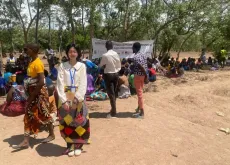
A good harvest means little if crops cannot reach a market. Across Malawi, farmers work hard to increase production, but selling what they grow can be just as challenging as growing it. Helping bridge that gap became part of Runnan's work. She served as a Food Systems Analyst with WFP and supported Value Chain Development initiatives that helped farmers improve production, connect with markets and strengthen their incomes. Her volunteer assignment, which was funded by China and ended earlier this year, included an analysis of the markets and field visits to monitor crops, training on agronomy and post-harvest loss management.
Behind every bag of sorghum, sesame or cowpea was a bigger question: how could farmers secure better markets and higher incomes? Finding those opportunities became part of her daily work. Thousands of kilometres from home, she found that her greatest contribution was not only her technical expertise, but also her ability to bridge two worlds. And thus, Runnan started exploring opportunities for collaboration between WFP Malawi and Chinese private-sector partners. During visits with farmers, she saw how decisions made far from the field shape what happens in it. Training, financing and market access might seem like separate issues on paper, but for farming families they determine whether a harvest becomes an income.
One of the biggest lessons Runnan took from her UN Volunteer assignment was that initiative matters."I realized this wasn't like school, where tasks and direction are handed to you," she says. "Here, you have to step forward. Nothing will happen if we just stay put.”
A flood can change the geography of a family’s life—So can drought
While Runnan analyzed food systems and food security trends, Shinya worked on a different challenge: helping communities prepare for and recover from climate shocks.
A UN Volunteer from Japan under a funded assignment that ended earlier this year, Shinya worked as Social and Economic Recovery and Planning Expert with IOM on climate resilience, disaster risk reduction and recovery planning, work that rarely attracts attention but can shape the future of entire communities. Much of it happened behind the scenes: reviewing technical reports, convening partners, consulting government counterparts and helping design plans to protect livelihoods when climate pressures force people to move.
The experience also changed him. "Working in Malawi and collaborating with Malawian and international colleagues strengthened my communication skills and gave me a deeper appreciation for multicultural teamwork," Shinya reflected.
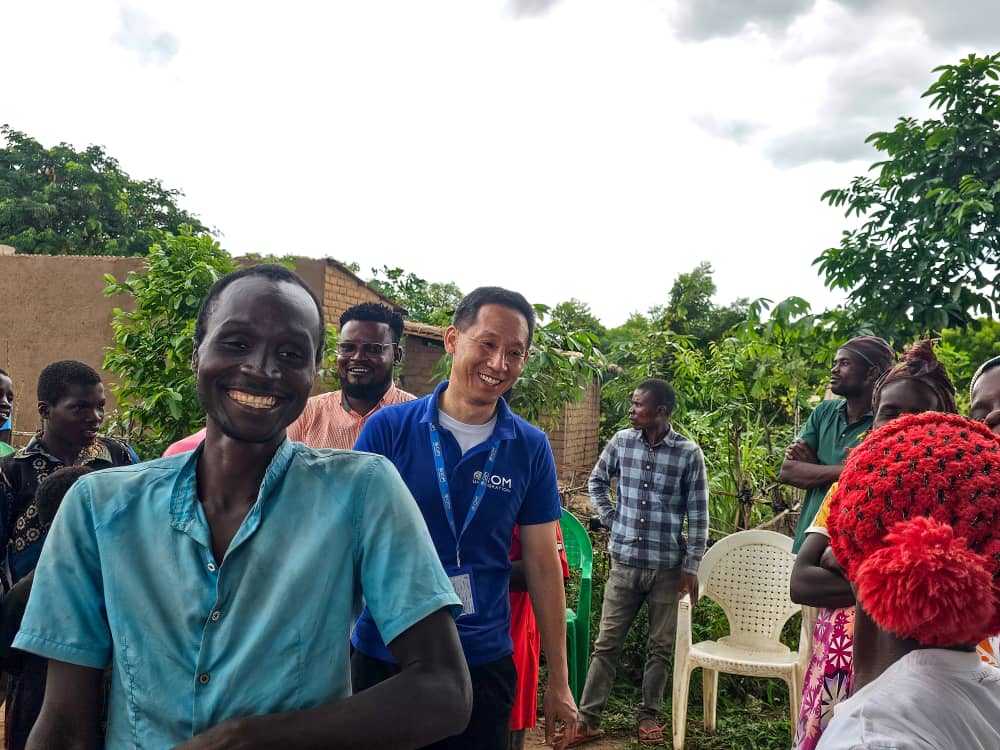
He also travelled to Chikwawa District. During activities linked to the Just Energy Transition Project, communities received solar mini-grids and energy-efficient cookstoves. Suddenly, the language he had encountered in programme documents appeared in everyday life. A solar mini-grid meant access to cleaner energy. An energy-efficient cookstove entered a household and became part of an ordinary activity such as preparing a meal.
Shinya also supported work under the Kampala Declaration on Migration, Environment and Climate Change, which brings countries together to tackle the growing impact of climate change on migration and displacement.
At first glance, Runnan and Shinya's assignments could not have been more different. One focused on food systems and markets. The other on climate resilience and recovery.
Yet their journeys followed the same arc.
Both arrived carrying expertise. Both were pushed beyond it. Runnan learned that initiative opens doors no job description can predict. Shinya saw technical solutions transformed into something deeply human when they reached the communities they were meant to serve.
Their stories remind us that volunteering is never a one-way act of service. The knowledge volunteers bring matters. But so do the lessons they take home.
They came asking, "What difference can I make?"
They left asking something far greater:
"How has this experience changed me?"