
What Keeps a Peace Mission Running? The Work You Never See

In the Democratic Republic of the Congo (DRC), peace work doesn’t always look like what you see on the news. It’s not just convoys on the move or leaders at the negotiating table. Much of it happens quietly—people tracking political shifts, bridging conversations across languages, or figuring out how to move staff safely when tensions spike. 

At the United Nations Organization Stabilization Mission in the Democratic Republic of the Congo (MONUSCO), UN Volunteers are part of this everyday effort. Often out of sight, they keep things running—shaping analysis, supporting coordination, interpreting conversations, and managing logistics in a country where conditions can change fast. Their work may not grab headlines, but without it, the Mission couldn’t function.

Reading political tensions before they escalate

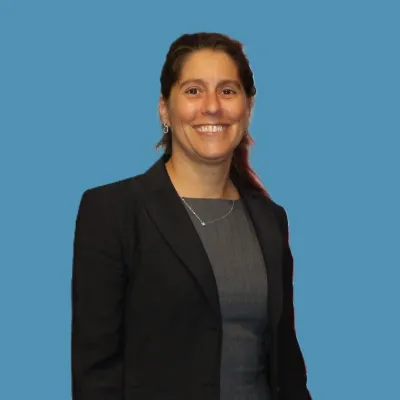
Neema Atosha grew up in South Kivu, eastern DRC, a region marked by armed conflict and displacement. She says what she saw early on shaped her journey ahead. In 2022, she joined MONUSCO’s Political Affairs Division, where she is a Political Affairs Assistant. At first, she was based in Bukavu during the lead-up to the 2023 general elections.
Refugee at 15, Community Builder Years Later

“I left Namibia at 15 years old and went into exile. We were refugees during those years.” Kirsti Mukwiilongo was a teenager when she left her home in Namibia. It was the height of the liberation struggle, and safety lay beyond the border. Like many others, she moved between countries—Angola, then Zambia—finishing secondary school as a refugee. Those years marked her for life. “We were assisted by other countries, by other people,” she recalls. The experience stayed with her—shaping how she responds and what matters to her. “That gave me compassion. It gave me purpose.”

Years later, she did something few people do. She returned—not to her own safety, but to instability. This time, not as someone needing help, but as someone ready to carry weight.

Asian partners meet at UNV Headquarters to shape the next chapter of collaboration

Held during International Volunteer Year 2026, the Roundtable will focus on how volunteer action can strengthen solidarity and practical cooperation in the region and globally.

Partners will review results from UNV’s Full Funding and Special Voluntary Fund, exchange lessons, and explore new ways to work together as priorities evolve across Asia and in the UN system.

Loudly or Quietly? The Choice That Will Decide Solidarity’s Reach

Authors

  • Geraldine Becchi
    Geraldine Becchi Team Lead, Partnerships UNV
  • Sukhrob Khoshmukhamedov
    Sukhrob Khoshmukhamedov Chief, External Relations & Communications Section UNV

For more than half a century, several traditional development partners have been among the most consistent backers of global solidarity through the United Nations Volunteers (UNV), quietly supporting, funding and sustaining it. Since UNV’s creation in 1970, traditional development partners have remained among its most consistent supporters. For example, Europe’s imprint on UNV is visible in leadership, participation, and policy influence. Four of UNV’s ten Executive Coordinators have come from European countries. Between 2007 and 2025, around eleven per cent of all UN Volunteers originated from the European Union or traditional European donor countries. European governments have also consistently spoken in support of volunteerism at the UNDP Executive Board and backed global commitments such as the declaration of 2026 as the International Volunteer Year.

The contribution of traditional partners to UNV is not symbolic. It is practical and strategic. 

Connecting Refugees to Jobs and Income

When Kei Tanaka arrived at the UN Refugee Agency (UNHCR) field office in Uganda as an Associate Livelihood and Economic Inclusion Officer, there was no confirmed budget for livelihood activities. Her task was clear: expand economic opportunities for refugees and host communities.

I proactively engaged external stakeholders, including the Japan International Cooperation Agency (JICA) and private sector partners, to explore collaboration,” 

Olé, Olé, Olé—FIFA joins UN in support of IVY 2026