
Executive Coordinator presents UNV 2025 results to the Executive Board

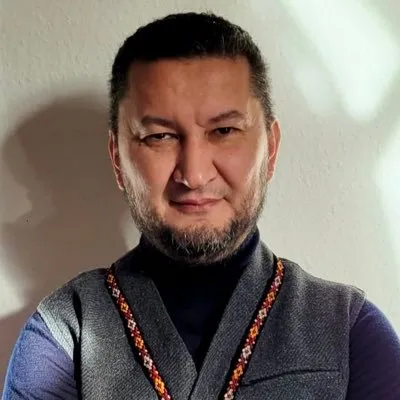
Toily Kurbanov, Executive Coordinator of United Nations Volunteers (UNV) presented the 2025 Annual Report of the Administrator at the Executive Board in New York on 10 June 2026. The Executive Board consists of the United Nations Development Programme (UNDP), the United Nations Population Fund (UNFPA) and the United Nations Office for Project Services (UNOPS).

Mr. Chair,

Distinguished delegates,

This is the fifth time I have the privilege of presenting the annual report of UNV to the Executive Board.

First time when I was presenting in 2021, I was given 20 minutes to allow more time for dialogue among the Member States. The following year, it became 15 minutes, then 10, and now I have only five. I look forward to the challenge the board will set for me next year.
Capturing the Full Value of Volunteering in Crisis Contexts

Numbers are not enough. Measuring volunteering must go beyond hours and activities to show real change in people’s lives, communities and support systems. 

The webinar opened with remarks by Olga Zubritskaya-Devyatkina, UNV Regional Manager for Arab States, and was facilitated by Professor Matt Baillie Smith and Dr Bianca Fadel of Northumbria University. Drawing on Chapter 6 of the 2026 State of the World’s Volunteerism Report, it brought together researchers and practitioners from crisis-affected contexts.

If Solidarity Is The Principle, Volunteering Is Its Discipline

Author

  • Toily Kurbanov
    Toily Kurbanov Executive Coordinator UNV

Late in the evening, after the desks have emptied, a volunteer stays behind at a reception centre to help a family fill out forms in a language they do not yet command. No one records the moment. Yet for that family, something shifts. The world, which had narrowed, opens a little again.

This is how solidarity begins. Not as an abstraction, but as an act.

Our age has no shortage of upheaval. Displacement today is not episodic; it is widespread. Conflicts endure, climates shift, and fragile systems strain under repeated shocks. In such a world, sympathy alone is insufficient. It must be organized, sustained, and given direction. Solidarity must become service.

Las causas estructurales de la violencia—La voz de una Voluntaria ONU en Ecuador

Ecuador es un país de una notable belleza natural y un rico patrimonio cultural. Sin embargo, bajo esta diversidad subyace una necesidad cada vez más profunda de inclusión de los pueblos indígenas y las comunidades locales. Los pueblos indígenas han enfrentado marginación y, aunque la Constitución consagra el principio de interculturalidad, el diálogo genuino sigue siendo frágil y desigual. En este complejo contexto, Noémie Dreux desempeña un papel fundamental. Es Voluntaria ONU Especialista en Prevención de Conflictos y Violencia para el Programa de las Naciones Unidas para el Desarrollo (PNUD). Su asignación como voluntaria está financiada por el Gobierno de Francia.

"Ecuador está marcado por una larga historia de exclusión de los pueblos indígenas y un diálogo intercultural frágil, lo que continúa generando tensiones", explica Noémie. "A pesar de que la Constitución reconoce al país como intercultural y plurinacional, aún existe una comprensión limitada de lo que estos conceptos significan realmente, tanto en principio como en la práctica."