Don’t Scale Back—Scale Up: Iraq’s Race to 3,000

By late 2025, the clock was closing in—and the numbers weren’t.
UN Volunteer, Harith Sami Abdulhameed, who had been working as a Sustainable Development Goals Assistant with the United Nations Development Programme (UNDP) in Iraq, stared at the data with growing urgency. A city-wide survey in Baghdad—measuring how young people experienced healthcare, education, and government services—had gathered just 1,700 responses. It needed 3,000.
There were only 7 to 10 days left.
For many teams, this would have marked the end of ambition—a quiet acceptance of the gap. But Harith and his colleagues saw it differently. If the data mattered, the effort had to match it. So they made a bold call: don’t scale back—scale up. Within days, their small team of 20 Online Volunteers would become 70.

The young matter

Volunteerism Is the Foundation of Sport and Diaspora Systems

Author

  • Nada Rochevska
    Nada Rochevska Sports Volunteer Management Expert

For years, efforts to capture volunteerism have focused on scale, how many people volunteer, how many hours they contribute, and what the economic replacement value might be. What is not measured remains largely invisible in policy and decision-making processes. This reflects a broader shift, from viewing volunteerism as a peripheral or “sideline” activity to recognizing it as a system that underpins community functioning and requires structured policy attention. Those working closely with volunteers understand that volunteering extends far beyond measurable outputs. Volunteering often functions as the invisible layer that holds communities together, particularly where formal systems are under pressure. It is built on relationships, trust, and a shared sense of responsibility, elements widely recognized in research on social capital, yet still insufficiently integrated into mainstream measurement approaches. These dimensions are essential for building resilient and inclusive societies.

This reality is especially visible in grassroots sport and diaspora communities, including those in the Western Balkans. In these contexts, volunteerism is not a supplementary activity; it is the foundation on which systems operate. Evidence from sport-based Erasmus+ projects and volunteer management initiatives across Europe consistently shows that local sport organizations depend on volunteers not only for delivery, but for governance, coordination, and long-term sustainability. 

Taking on early challenges

Authors

  • John Gordon
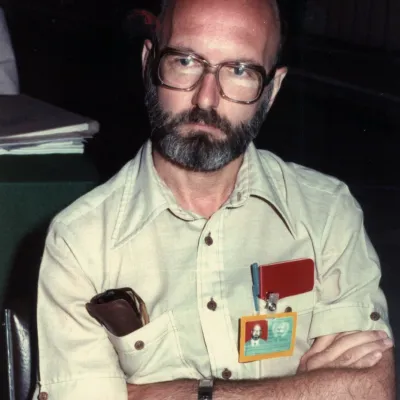
    John Gordon former UNV Executive Coordinator (1974 to 1977)
  • Assad K. Sadry
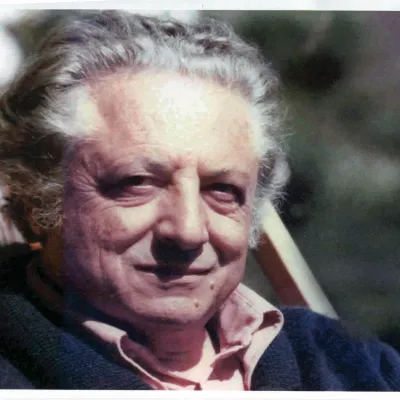
    Assad K. Sadry First UNV Executive Coordinator (1971 to 1973)

So many names - so little space.