



As 2025 draws to a close, we look back on a year shaped by profound global shifts. The humanitarian system remains overstretched, with more than 300 million people now requiring humanitarian assistance. Debt distress continues to narrow fiscal space for many countries. Climate shocks are intensifying, and artificial intelligence is advancing faster than most regulatory systems can keep pace.
For Africa, these shifts are not only challenges. They are also opportunities to reposition, to leapfrog, and to show that resilience can be paired with innovation. Across the region, governments, regional institutions, and the African Union are driving initiatives that seek to unify the continent, from the African Continental Free Trade Area (AfCFTA) to cross-border climate adaptation projects.
What is clear is that Africa’s greatest comparative advantage remains its people — a young, dynamic population ready to drive transformation.
The intersection of these forces becomes particularly clear across the region in countries such as Ethiopia, where I recently met with UN partners and UN Volunteers to explore how volunteerism can accelerate national priorities under the new UN Cooperation Framework for 2025–2030.
As Africa’s second most populous nation, with more than 120 million people, Ethiopia is a country of continental and global significance. It is effectively navigating socio-political dynamics while confronting economic headwinds. In Addis Ababa, where the African Union and UN Economic Commission for Africa (UNECA) are headquartered, the fabric of Ethiopia is woven inextricably with the shiny new infrastructure evident in the capital. This is a story resembling many African capitals signaling innovation and resilience.
In my consultations with UN partners in Ethiopia, one theme was consistent: that the development landscape is undergoing a seismic shift globally, resulting in creativity and innovation to address numerous development bottlenecks, particularly in Africa. One of the consequences of the radical shifts is reliance on human capital available nationally to respond to the development of priorities in the countries. Across the region, national human capital is increasingly at the center of how development priorities are shaped, implemented, and sustained.
Programmes on peacebuilding, elections, youth employability, and digital innovation are advancing, but they require hands and minds to move from plans to impact. This is where UN Volunteers continue to play a decisive role.
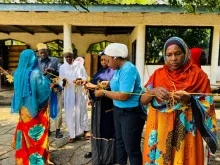
Today, out of 2,400 UN Volunteers across East and Southern Africa, Ethiopia hosts over 130 UN Volunteers. They serve across 19 UN entities. They are contributing in a wide variety of areas ranging from public health surveillance, to advancing dialogue and reconciliation efforts, to technical support in digitalization and data. Many serve in fragile or hard-to-reach areas, extending the UN’s reach where regular staffing or budgets are constrained. Their presence not only strengthens delivery but also injects the spirit of solidarity and service that are hallmarks of volunteerism. The impact is visible. National UN Volunteers supporting UNICEF are on the frontline of efforts to promote inclusion and enhance access to nutrition, education, and basic services for children. Their counterparts serving with UNFPA and UN Women are helping tackle gender bias. The stories are similar for many UN Volunteers serving across the other UN entities.
What is unfolding in Ethiopia is mirrored across East and Southern Africa and beyond. Across the region, in countries such as Somalia, Mozambique, Tanzania and South Sudan, volunteerism is reinforcing national systems in equally tangible ways. For example, through a joint initiative between World Health Organization (WHO) and UN Volunteers, women professionals serving as UN Volunteers with WHO are helping bridge health service gaps while building long-term national health capacities across 38 countries in the region.
At the continental level, Africa is also stepping into a more assertive role in global governance. The African Union now holds a permanent seat in the G20, a recognition of its growing influence.
Regional institutions like UNECA are shaping global conversations on finance, climate and digital governance. For these agendas to translate into tangible benefits for citizens, they need practical capacity at country level. Volunteerism, especially when designed as a Pan-African exchange, helps translate continental visions into practical action. A Kenyan volunteer supporting AfCFTA trade facilitation in Malawi, or a Zimbabwean data specialist boosting climate monitoring in Tanzania, demonstrates what African cooperation looks like in practice.
This is the essence of Africa’s leapfrogging potential: mobilizing its demographic dividend, moving talent across borders, and embracing technology to widen access to opportunity. UNV is enabling this through diverse modalities—from UNV’s Special Voluntary Fund that enables rapid response and promotes inclusion and diversity, to UNV’s Expert Volunteer modality that taps into senior-level technical knowledge available within the region. Over 10,000 Africans have served as UN Volunteers globally in the past five years, contributing to peacekeeping, humanitarian action, climate resilience, and digital innovation.
The way people contribute to development is also changing—deviating from the confines of national boundaries. The rapid digital transformation sweeping across Africa offers new avenues for people to contribute regardless of geography, mobility, or resources.
Increasingly, young professionals — from coders in Kigali to communicators in Addis Ababa and data analysts in Nairobi — are participating in development work through digital means. UNV’s Online Volunteering service is a powerful enabler of this shift, connecting skilled individuals to assignments across the world that can be completed virtually. Whether supporting climate analytics, designing digital learning tools, translating materials into local languages, or mentoring youth-led initiatives, online volunteers are expanding what participation looks like and ensuring that talent is not limited by borders.
This blend of in-person and digital volunteerism reflects the future of development support in Africa: agile, skills-driven, Pan-African, and inclusive. It ensures that as the continent’s ambitions grow — from implementing AfCFTA to advancing climate resilience and AI governance — Africans everywhere can contribute meaningfully to the continent’s next chapter.
To fully realize this future, several imperatives stand out. Volunteer efforts must increasingly reflect the diversity of our societies, with increased representation of women, youth, and marginalized groups. We must also continue to measure and value volunteerism. This is precisely the direction outlined in UNV’s 2026 State of the World’s Volunteerism Report, which underscores the need for countries to better track and understand the contribution of volunteerism to national development.
Despite the turbulence of our time, Africa’s trajectory can still be one of possibility. With a unified African Union, resilient regional institutions, abundant natural and human resources, and a vibrant youth population, the continent has the ingredients to drive a new chapter in global progress.
As we look to 2026—the International Year of Volunteers for Sustainable Development—the momentum is on the continent’s side. Volunteerism—in communities, across borders, and increasingly online—will remain central to Africa’s future. When people are given the chance to contribute, learn, and lead, we build the Africa we want: peaceful, prosperous, united, and resilient.