



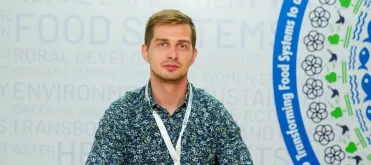
By 2050, the global workforce will belong to today’s under 25s, placing the future of economies—and the survival of food systems—squarely in their hands. As the Food and Agriculture Organization of the United Nations (FAO) marked its 80th anniversary in October 2025, one reality was impossible to ignore: young people are no longer the future of agrifood systems—they are already on the front lines. From innovation and digital transformation to climate adaptation and sustainability, youth are driving change in a sector that cannot afford to stand still. FAO Liaison Office in Moscow spoke with Aleksei Gorkov, a young UN Volunteer funded by the Russian Federation. Based as an Innovation Specialist at FAO’s Regional Office for the Near East and North Africa in Cairo, Aleksei represents a generation that is not waiting for permission to lead—but is already doing so. The following are excerpts of the interview.
Tell our readers about yourself: what is your background? Where did you work before taking on a UN Volunteer assignment with FAO?
I hold a Master’s degree in Agricultural Economics from the Higher School of Economics in Moscow under the academic supervision of Evgenia Viktorovna Serova, the first Director of the FAO Liaison Office in Moscow. Thanks to her, I learned about FAO’s mission, which deeply resonates with my values. Before joining the UN system, I worked as an analyst at a local organization that was affiliated with the Ministry of Agriculture of the Russian Federation, where I was responsible for analyzing data on foreign trade.
How did you learn about the United Nations Volunteers (UNV) and what was your main criterion for choosing to serve with FAO?
I learned about UNV opportunities through colleagues at the FAO office in the Russian Federation and I am sincerely grateful for their support. My education, professional skills, and personal interests are directly connected to agricultural development; therefore, I considered serving only with FAO. I firmly believe that agriculture is one of the most important and promising sectors of the global economy, as nutrition and food security are the foundations of life.
What challenges did you face in preparing for your assignment with FAO?
In terms of the work, the initial phase brought both challenges and opportunities—particularly in learning FAO’s internal information systems and databases, and in becoming familiar with the many acronyms used across the UN system. The support of colleagues was instrumental in navigating this process.
What are your main responsibilities in FAO? Did you have any expectations before starting the programme, and were they met?
I serve as an Innovation Specialist in Agriculture with an FAO unit that focuses on rural development. Over the course of a year in this assignment, the range of tasks and initiatives I am involved in has continuously expanded. Throughout 2025, I supported the digitalization of rural areas in the region, providing analytical support to regional initiatives, preparing materials on the use of artificial intelligence in agriculture, coordinating with country offices, and contributing to FAO’s knowledge base on digital solutions for agrifood systems.
In 2026, my focus turns to the development of country profiles on rural digitalization, launching a regional webinar series on AI in agriculture, supporting an assessment of digital readiness in rural areas of Mauritania, and developing a concept for a regional FAO digital platform on innovation.
In addition, I continue to support team initiatives, such as work on the concept of a “digital cooperative” and its adaptation to regional contexts. I entered the programme without very specific expectations, beyond a desire to gain hands-on experience in an agricultural system structurally different from the Russian Federation—one shaped by small-scale producers rather than large agricultural holdings.
What skills do you believe are essential to complete a UN assignment? Share some of your achievements, and tell us how you apply your previous experience while serving with FAO?
The key skills for a successful UN Volunteer are proficiency in foreign languages, especially English, and, along with that, being able to communicate effectively. My current position closely aligns with my previous experience, particularly in analysis, information structuring, and the development of conceptual documents. The main difference lies in the scale of the tasks and their international scope. Among my achievements, I would highlight the report on the digital landscape, which I worked on over recent months. It was published as a chapter in the Food Policy Monitoring Bulletin.
Which FAO projects and initiatives are you directly involved in?
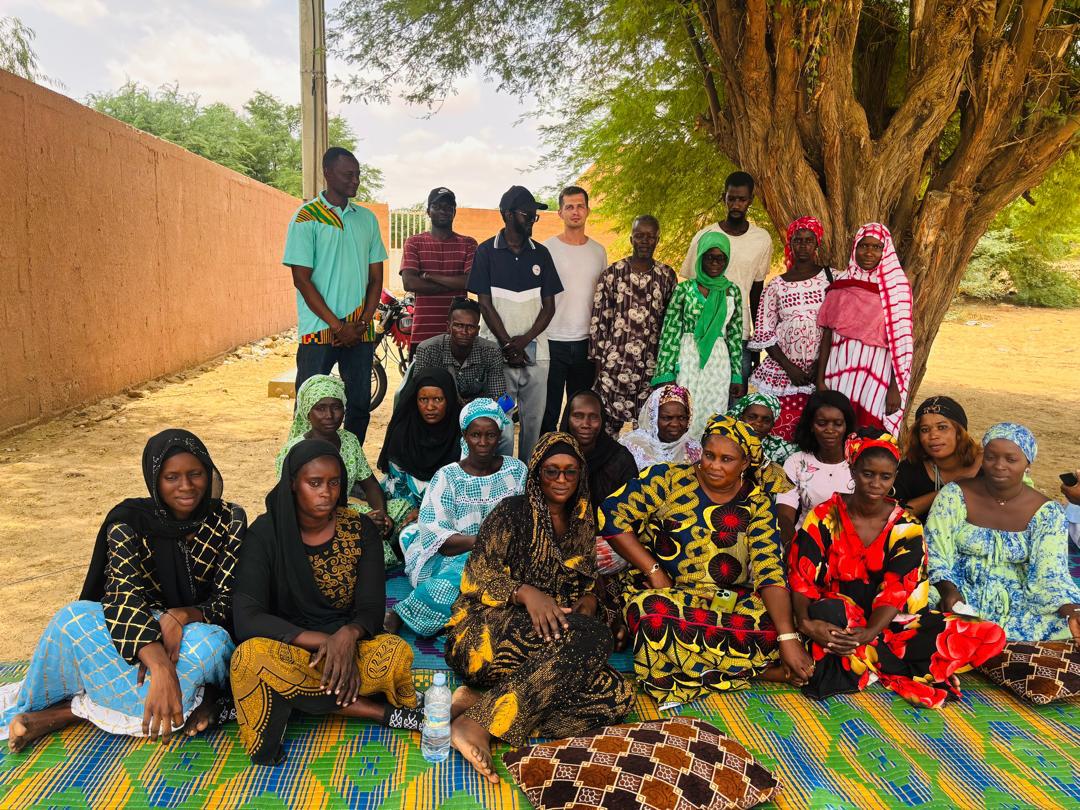
In 2025, I was doing research and analysis of innovation technologies in agriculture, primarily in digitalization and digital services for rural producers. I mapped digital ecosystems, assessed digital solutions for small-scale farmers, and analyzed factors that influence inclusive and sustainable rural development. During that period, I focused on two FAO publications: an analytical section on agricultural digitalization for the Food Policy Monitoring Bulletin and a report based on the results of a field visit to Mauritania on the Digital Village Initiative. This work examined key conditions for successful implementation, as well as barriers to scaling and to ensuring the initiative's long-term sustainability. In addition, I research how digital technologies can be applied in rural agricultural value chains, focusing on the development, implementation, and scaling of digital services in countries with low digital readiness.
What are the ways to encourage youth participation in agricultural development?
As a person who grew up in a city, I could never have imagined that my career would be connected to the agricultural sector. However, I became deeply interested in global challenges—particularly the fragility of food systems, which became especially evident during the COVID pandemic.
Today, agriculture is not only about traditional forms of production, but a high-tech sector offering a wide range of opportunities: from farming to managing bioengineering projects and automated greenhouse complexes.
I believe young people can be engaged through effective communication and by demonstrating that modern agriculture is all about innovation, technology, and sustainable development.
What would you like to focus on in the future? Do you plan to build a long-term career with FAO?
I am inspired by the field I am currently working in and am keen to further develop my expertise at the intersection of digital technologies and agriculture. Looking ahead, I hope to grow professionally within the FAO and contribute to the sustainable development of the agricultural sector.
What advice would you give to young people who are interested in becoming UN Volunteers with FAO?
My advice would be not to be afraid of change and challenges. Remain open to new experiences and step out of your comfort zone. Even when difficulties arise, rely on the support of colleagues and mentors. The key is to stay proactive, genuinely curious, and be willing to learn.
UNV Editor’s note: This interview has been edited for length and does not constitute a verbatim translation of the original Russian text.