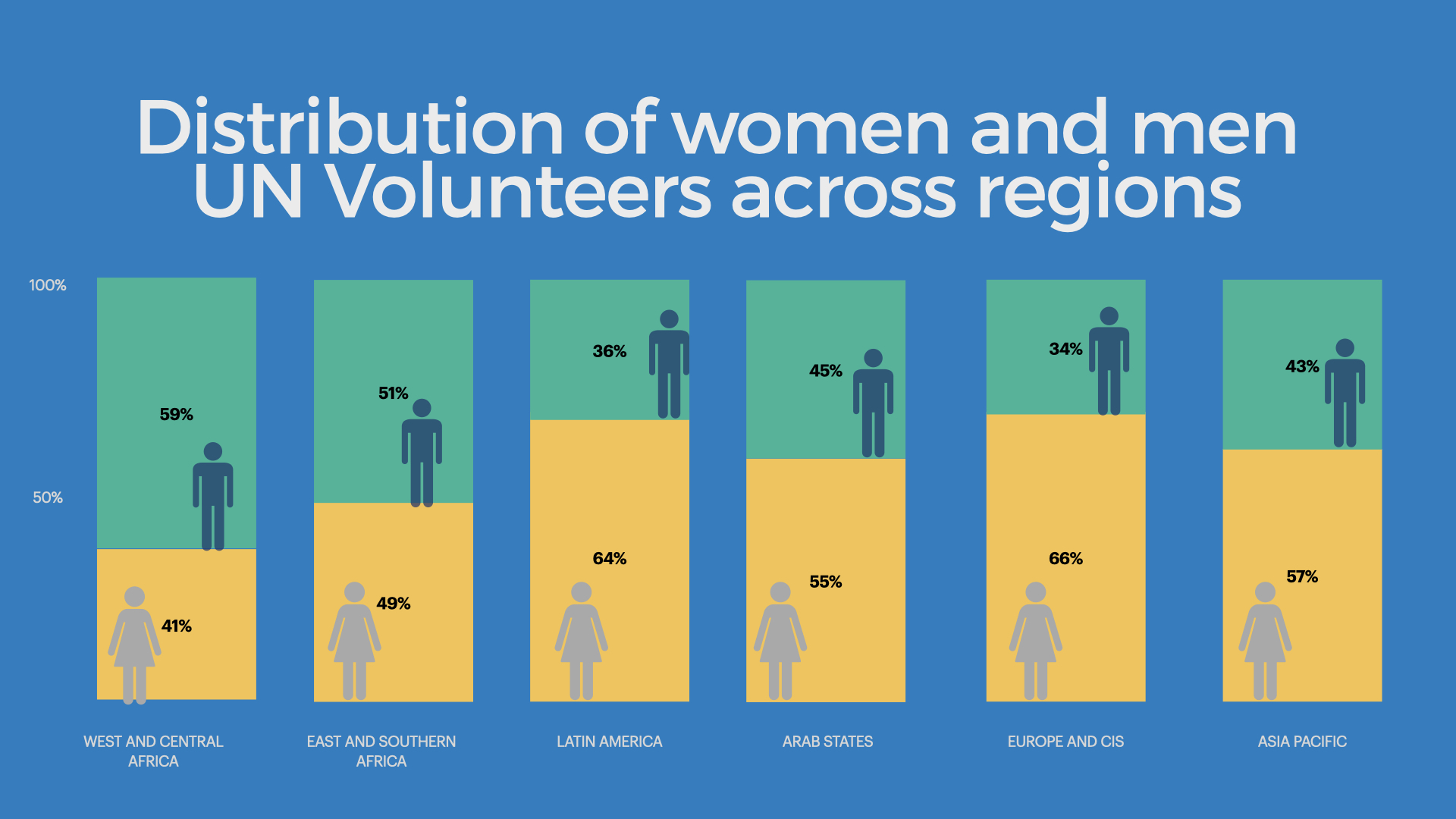
In 2019 and 2020, UNV reported achieving a 50-50 gender balance among its men and women volunteers. This is an admirable feat and sets a good foundation for moving towards gender equality. But the work does not end there. We also need to look at the hidden figures and go beyond averages to better understand and uncover intersectional disparities.
Are these numbers more or less the same across regions, age groups and types of volunteering work? Are women and men volunteers getting the same recognition for the same types of work? And how can disaggregating such data help us better address gender differences in volunteering?
What do the hidden figures tell us?
Looking beyond averages will tell a slightly different story about how we fare with achieving gender balance in volunteering - at UNV and at the global level.
For example, if we disaggregate data on UNV gender averages, we will see that in some regions such as in Western and Central Africa, the average drops to 40-60 in favour of male volunteers, whereas in Latin America, the number of women volunteers tend to be higher.