



I was born in Diourbel, a town in central Senegal, about 200 kilometers from Dakar, Senegal. It is not a place that appears often in global conversations about development. Yet, it is where my understanding of dignity, solidarity, and agency was formed.
I was marked by loss early on in my life. I lost my father, who helped shape Senegal’s army, when I was barely two years old, and my mother when I was 27. But I never grew up feeling deprived. I grew up surrounded by people – family, neighbours and teachers who believed that community is a form of wealth. Even in grief, there was love. Even in hardship, there was purpose.
My mother was a teacher before she became a political trailblazer: Senegal’s first woman mayor and vice-president of the National Assembly. She led at a time when leadership by women was rare. She did not ask for permission to care. She simply did. And she showed me by example, that being a woman is not a limitation, but a source of strength.
From her, I learned courage. Not the loud kind, but the steady kind. The courage to be who you are. To stand for others. To believe that leadership is not about status, but about responsibility.
When she passed away in 1992, the loss was devastating but what she gave me never left: a deep belief that our lives only truly make sense when they are useful to others.
From activism to service
My engagement in development did not begin in an institutional setting but through grassroots activism, particularly in advancing women’s rights. I had the privilege of contributing to the establishment of the Conseil Sénégalais des Femmes (COSEF): a pioneering platform that brings together Senegalese women leaders from across political parties, trade unions, media, the private sector and other institutions – with a shared focus on women’s economic and political empowerment.
Founded in 1995, COSEF emerged from a strategic reflection supported by a UNDP Regional Programme on the Promotion of Democracy in Africa and coordinated by the late Babacar Sine, an exceptional leader and advocate for democratic governance. The initiative was driven by the mobilization of diverse women leaders, notably under the leadership of renowned Senegalese writer Aminata Sow Fall, whose vision and convening power were instrumental in creating this unique and enduring framework.
Recently celebrating 30 years of sustained engagement, COSEF stands as a lasting example of inclusive, cross-sectoral women’s leadership in Senegal. I also contributed to the drafting of the Maputo Protocol, a milestone for gender equality on the African continent. Later, through my work with UNDP and UNIFEM (now UN Women), I supported women’s political participation across West and Central Africa, working on elections, representation and leadership.
University opened other doors. Through a National Model United Nations experience, I discovered multilateralism. Not as an abstract idea, but as a space where voices could converge. An internship at the Centre for Human Rights (now UN Human Rights) in New York confirmed something I already felt: development was not just a career path for me. It was a life commitment.
Learning from others
My work has taken me across continents, from Senegal to Mozambique, Cambodia, Democratic Republic of the Congo (DRC), Burundi, Côte d’Ivoire, New York, The Gambia and Cameroon.
In the DRC, I worked with one of the UN’s largest electoral assistance programmes. One image will never leave me: millions of Congolese standing in the rain for hours to vote, many of whom were voting for the very first time. No speech, no report, no theory compares to that moment. It taught me something fundamental: people do not lack courage or aspiration. What they often lack is opportunity.
In post-conflict settings, I worked on reintegration, transitional justice, security sector reform and recovery. Later, as a UNDP Country Advisor, I supported over 12 complex country contexts across Africa. Every experience reinforced the same lesson: development works when we listen, truly listen, to what people want for their own lives.
Choices, sacrifices and silence
As a woman, the journey has not been simple. My extended family expected me to settle down early. But I felt a responsibility to my parents’ legacy and to myself to continue this path of service.
Balancing family, personal life and work in fragile contexts requires sacrifices that are rarely visible. I have seen trauma up close among communities and among colleagues. Mental health remains one of the most challenging issues in development work, especially in some country offices and in hardship duty stations. Silence is often mistaken for strength. I believe leadership must create spaces where people can be human and not just resilient.
Leadership and volunteers at the centre
Following UN reform and the delinking of the UN Resident Coordinator function from UNDP, I became part of the first cohort of NextGen UNDP Resident Representatives. In The Gambia where I was posted, I worked alongside government and civil society to support democratic transition, peacebuilding and reform. I also led UNDP work in support of government efforts to overcome the global shock of COVID-19.
We introduced virtual courts, supported prison reform, strengthened health systems and expanded digital solutions. But what stayed with me most were the people who made these changes possible.
Volunteers matter
In every country I have worked, in moments of crisis and in times of hope, it was often volunteers who were first to show up and last to leave. People offering their time, skills and creativity, national volunteers grounding our work in local realities and international volunteers bringing solidarity across borders.
They gave their time selflessly to others. They adapted quickly, creating new opportunities and proposing new ways to help communities survive crises.. They brought deep local knowledge and unwavering commitment. They reminded me, every day, that development is not delivered. It is built together.
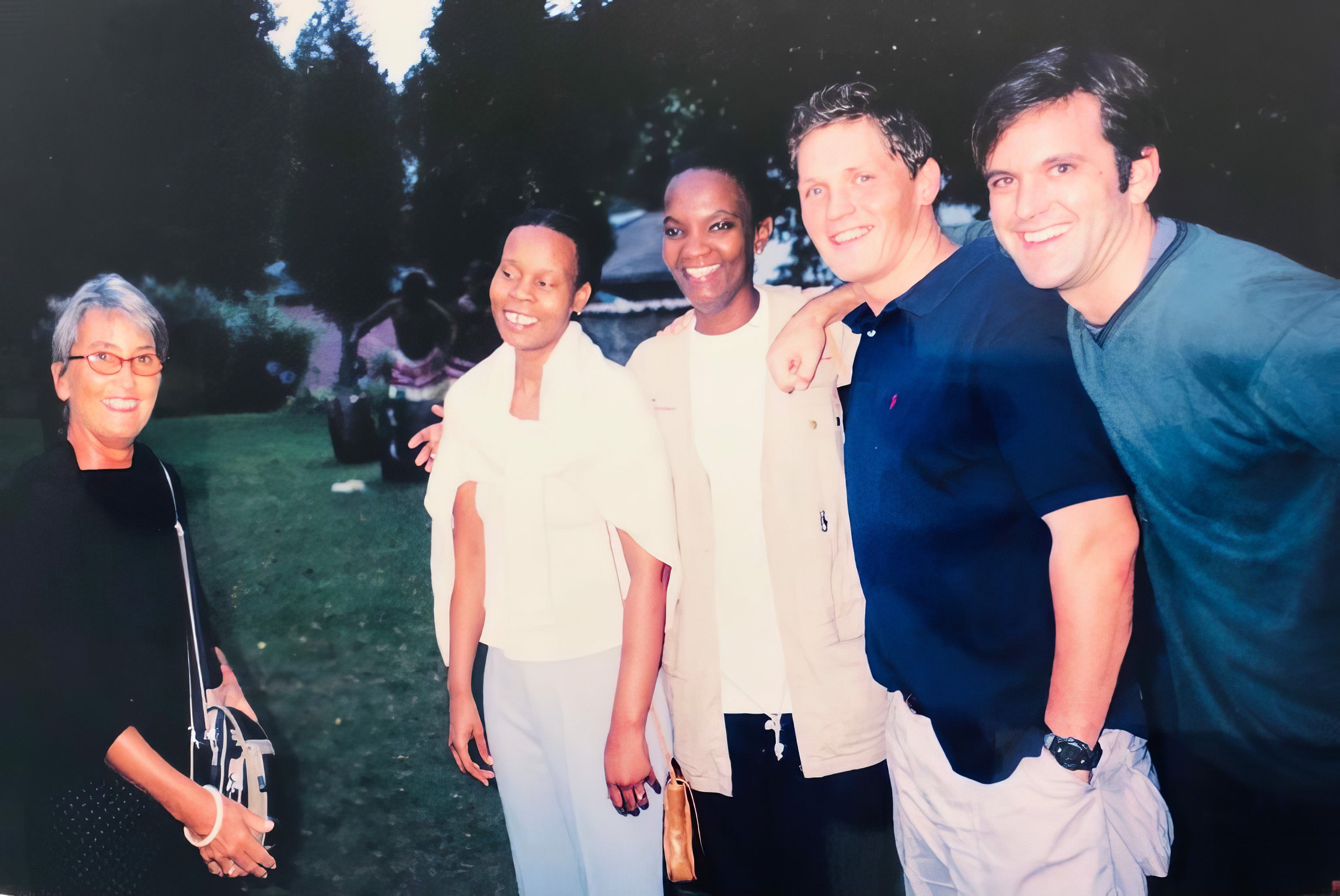
I served for two years (2000-2002) as a UN Volunteer at the UNDP Country Office in Mozambique, an assignment that combined substantive professional development with close institutional engagement. During this period, I acquired working proficiency in Portuguese and contributed to UNDP programmes supporting the police, electoral processes, parliamentary assistance and the justice sector.
This experience remains a defining milestone in my professional trajectory. My key contributions included participation in the Artists Against Poverty campaign and a central role in promoting collaboration between Eduardo Mondlane University and United Nations Interregional Crime and Justice Research Institute. This partnership enabled the conduct of victimisation and police performance surveys that informed the formulation of the police’s first Strategic Plan, integrating a gender responsive perspective. Equally significant was the strong inter-agency collaboration within the UN Country Team. Notably, in partnership with UNICEF and national counterparts, we supported the establishment of Mozambique’s first gender desk in model police stations, within the framework of the new Police Academy in Mishafuten.
Giving changes you
I am deeply convinced that volunteers are not a footnote in development. They are central to it. They carry values, hope and action into places institutions alone cannot reach.
I have learned that giving to others does not diminish you. It transforms you. When you commit to service, you begin to see the world differently. You understand that development is not about structures, but about dignity. It is about ensuring that people are seen, heard and given the chance to shape their own futures.
I hope more leaders understand that caring for others does not make you less ambitious. It makes your ambition meaningful. Leadership rooted in empathy is not weakness, it is necessary. An important lesson my mother left me is that your legacy is not what you accumulate. It is what you enable in others.
This blog is part of Journeys of Inspiration, a photobook. Many of the leaders whose stories are captured in this book began their journeys not in positions of authority, but in service—as UN Volunteers, as community activists, as individuals determined to make a difference.