



My first experience of volunteering had no official name. It happened in a classroom in Santo Domingo, as a little girl, long before I knew what the United Nations was. What I knew then, and what fifteen years in international development have only confirmed, is that participation is not a favour institutions grant to people. It is a right. And building the conditions for it to truly happen is one of the hardest and most important things we can do.
In 2013, that conviction brought me to join as a national UN Volunteer Specialist with UNDP in the Dominican Republic. Together with over 1,000 volunteers, I coordinated a national survey across all 32 provinces in which more than 220,000 Dominicans participated, placing the country 8th out of 193 nations in a global citizens' consultation on development priorities. That experience confirmed something I have carried ever since: when people are genuinely invited to shape decisions that affect their lives, they show up. Every time. Because participation is not charity. It is dignity.
From that starting point, I helped coordinate national consultations on the 2030 Agenda that brought together persons with disabilities, migrants, older persons, and other groups whose voices are too often absent from policy. I integrated over 60 institutions into the localization of the Sustainable Development Goals, launched the country's first open data lab for development, and trained more than 50 public institution teams. Each effort pointed toward the same question: how do we build systems where people can not only participate, but lead?
Laws Exist. Environments Take More Than That
The 2026 State of the World's Volunteerism Report introduces a framework called GIVE, which measures volunteerism across four dimensions: individual value, community value, economic value, and the environment that enables it. The Dominican Republic has real foundations: a Volunteer Law, a national development strategy that recognizes civic engagement, and a newly created National Committee for the International Volunteer Year 2026.
I have been part of processes that helped shape those foundations, including the review of the National Volunteer Law, support for the reform of the Criminal Code to embed human rights principles, and the update of disability legislation so that rights translate into real protections. Each process taught the same lesson: a law is a starting point, not a guarantee.
What makes volunteerism flourish is investment, recognition, and a culture that treats volunteers as essential contributors, not optional add-ons.
Volunteerism and Money: A Connection Worth Making
One of the things I have learned working at the intersection of development policy and financing is that volunteerism and public investment are not separate conversations. When the time, skills, and knowledge that volunteers bring are properly recognized and counted, they become part of how we plan and fund development, not an afterthought. And the question remains the same: whose contributions are we counting, and whose are we leaving out?
The Communities of Care programme, which I had the opportunity to coordinate alongside UNICEF, UN Women, UNDP, and ILO from within the UN system, is perhaps the clearest answer I have been part of. It is the country's first national care policy and it starts from a simple recognition: nearly 70 percent of economically inactive people in the Dominican Republic are women, largely because care for children, elderly relatives, and people with disabilities falls on them by default, without pay, without recognition, and without counting in any budget.
This is also where an important distinction becomes essential. Unpaid care work is not the same as volunteerism. Both are invisible in our systems, but unpaid care is rarely a choice. It is a burden that limits women's freedom to participate in public life.
Volunteerism, at its best, is an expression of agency. Young women often carry both at once, being among the most active in community spaces and yet among the least visible in the data. Expanding the conditions for volunteerism means, urgently, addressing that imbalance.
Three Things That Would Make A Difference
First, build on what already exists. In the Dominican Republic, volunteerism is predominantly informal and deeply rooted in communities, churches, and care networks. The country also has a volunteerism law, its implementing regulations, and a national center for volunteerism monitoring and promotion. Nevertheless, any measurement framework should continue recognizing and valuing both these institutional structures and the multiple community-based and informal expressions of volunteerism. Second, ensure that data serves those who contribute to it. Information generates trust when it translates into tangible improvements, recognition, and greater opportunities for communities and volunteers. Third, strengthen financing mechanisms and the sustainability of volunteerism.
Evidence and data have a greater impact when accompanied by investments, institutional support, and mechanisms that help strengthen the capacities and work of volunteer organizations and volunteers as central actors in sustainable development.
The International Volunteer Year 2026 and the newly established National Committee are a real opportunity to shift that. The Dominican Republic has the foundations, the people, and the civic energy to lead this change in the region. What is needed now is the collective decision to treat volunteerism as what it has always been: essential.
Every financing framework I have helped design, every law I have supported, every consultation I have coordinated has ultimately pointed in the same direction: ensuring that what people give, freely and without recognition, moves from the field to policy, from the invisible to the structural, from a contribution that goes unnoticed to one that shapes decisions, opens platforms, and drives change.
GIVE is a powerful step in that direction. But the will to act on it has to come from the conviction, learned early and confirmed often, that participation is not a privilege to be granted. It is a right to be built, resourced, and made political. And doing that, with everyone and for everyone, remains the most important work there is.
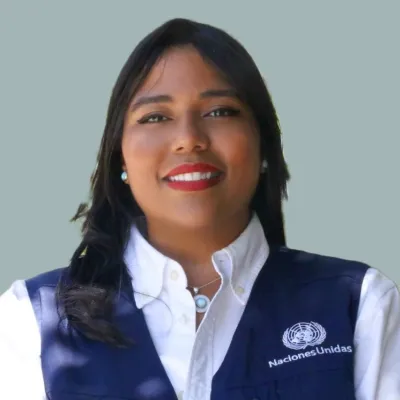
Mildred Clementine Samboy Hernández is a Development Coordination Officer, Partnerships and Development Finance, UN Resident Coordinator’s Office, Dominican Republic. She is a lawyer and specialist in human rights, public and social policy, data, partnerships and development finance.
The State of the World's Volunteerism Report (SWVR) Blogs spotlight perspectives from academics, partners and experts on volunteerism.