



The humanitarian system cannot keep planning as if volunteers do not exist.
That sounds absurd. Yet it is exactly what we do.
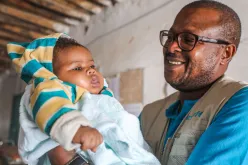
Every major crisis tells the same story. Volunteers are the first to respond. They keep services running when roads are cut off, institutions collapse or conflict blocks access. They are often the last people still standing when international organizations are forced to leave. Yet they remain largely invisible in humanitarian plans, budgets, coordination mechanisms and safeguarding arrangements.
This is not a minor oversight. It is a warning that the humanitarian system is out of step with the way humanitarian action actually happens.
The Humanitarian Reset starts from a similar premise. It recognizes that today’s humanitarian system must become leaner, more locally led and more accountable in the face of growing needs and shrinking resources. That ambition is welcome. Yet it might remain incomplete if it continues to overlook one of the system’s greatest strengths: the volunteers who make humanitarian action possible every day.
The recent UN Volunteers report Volunteerism in Humanitarian Action delivers an uncomfortable finding. Humanitarian responses consistently rely on volunteers while planning, financing and safeguarding as if volunteer-based delivery barely exists.
That is not an implementation gap.
It is a design flaw.
Nowhere is this clearer than in today’s crises.
In Sudan, neighbourhood-based Emergency Response Rooms, rooted in the long-standing tradition of nafeer, became the humanitarian system in many communities. Volunteers organized evacuations, ran community kitchens, delivered health services, provided psychosocial support and coordinated protection when formal institutions and international actors could no longer reach people. Their legitimacy came from trust, proximity and accountability to their neighbours—not from organizational status. Yet these same volunteer networks remained largely outside formal financing and decision-making.
In Haiti, konbit—the deeply rooted tradition of collective mutual support—has enabled communities to sustain assistance where institutions are absent or overwhelmed. Again, these volunteer systems are not substitutes for humanitarian response. They are humanitarian response.
Crises do not create volunteerism.
They reveal the social infrastructure that already exists.
This matters because the humanitarian system still tends to treat volunteerism as something mobilized during emergencies rather than recognizing it as a permanent source of resilience embedded in communities long before disaster strikes.
It also exposes an uncomfortable truth about localization.
For nearly a decade, humanitarian leaders have committed themselves to shifting power closer to affected people. Yet too often, localization has meant transferring responsibility without transferring power, resources or protection.
Sudan illustrates this starkly. Communities assumed enormous operational responsibility—and personal risk—without gaining equivalent influence over funding or strategy.
Ukraine tells a similar story. Volunteer and municipal networks have sustained evacuations, logistics, shelter support and essential services throughout the war, often adapting faster than international systems. Yet much of this capacity still operates alongside, rather than within, humanitarian planning and financing structures.
The people closest to the crisis increasingly carry the greatest burden while remaining furthest from the decisions that shape the response.
The Humanitarian Reset rightly calls for decision-making to move closer to crisis-affected communities. But that ambition cannot be realized if the people and volunteer networks delivering much of the response remain largely invisible within the system itself.
Trust is another blind spot.
Humanitarian systems understandably prioritize organizations that are registered, compliant and easy to fit into coordination structures. But communities often trust people before they trust institutions.
That is why volunteer networks continue to sustain access in places such as Sudan, Haiti and the State of Palestine. Their legitimacy comes from relationships built over years. They know who is most vulnerable. They understand local dynamics. They can continue working where outsiders cannot.
If the Humanitarian Reset is serious about rebuilding trust and legitimacy, this is exactly the kind of locally rooted capacity it should recognize and strengthen.
The evidence also points to another imbalance. Across humanitarian response plans reviewed in the UNV study, volunteers appear most often as collectors of information—supporting community feedback, referrals and accountability to affected populations. The system readily recognizes volunteers when it needs information from communities.
It is far less willing to recognize them as part of the humanitarian workforce that requires training, supervision, insurance, safeguarding, psychosocial support and duty of care.
Recognition without protection is not recognition at all.
The encouraging news is that we already know what works.
Responses to Ebola showed that investing in volunteers before crises pays off. Community volunteers were progressively integrated into national health systems with defined roles, training, supervision, protective equipment and clear accountability.
Bangladesh has similarly embedded volunteers within national disaster preparedness systems, with established activation mechanisms, safeguarding standards and government-endorsed guidance.
Preparedness—not improvisation—is what turns volunteer commitment into humanitarian capacity.
This is precisely where the Humanitarian Reset offers an opportunity.
Recognizing volunteers is not about creating another layer of humanitarian bureaucracy or formalizing every act of civic solidarity. It is about acknowledging how humanitarian action is already delivered—and taking responsibility for it.
Governments should integrate volunteer engagement into national preparedness and disaster management systems. Donors should ensure humanitarian financing can support volunteer-enabled delivery, including training, safeguarding and duty of care where volunteers are central to the response. United Nations agencies and humanitarian partners should make volunteer roles explicit in humanitarian response plans, coordination structures and workforce planning, rather than allowing them to disappear behind phrases such as “community outreach” or “local mechanisms.”
The Humanitarian Reset calls on us to rethink how humanitarian action is organized.
Recognizing volunteerism is one of the most practical ways to make that ambition real.
As we mark World Humanitarian Day during the International Volunteer Year 2026, we should certainly celebrate volunteers.
But celebration is not enough. The humanitarian system should start planning as if volunteers do exist.
This opinion piece was originally published in Relief Web and UN.org.