



“I left Namibia at 15 years old and went into exile. We were refugees during those years.” Kirsti Mukwiilongo was a teenager when she left her home in Namibia. It was the height of the liberation struggle, and safety lay beyond the border. Like many others, she moved between countries—Angola, then Zambia—finishing secondary school as a refugee. Those years marked her for life. “We were assisted by other countries, by other people,” she recalls. The experience stayed with her—shaping how she responds and what matters to her. “That gave me compassion. It gave me purpose.”
Years later, she did something few people do. She returned—not to her own safety, but to instability. This time, not as someone needing help, but as someone ready to carry weight.
Humanitarian work, she says, wasn’t a career choice—it was destiny. When she later completed her first degree in Australia and returned to southern Africa, she joined the UN Refugee Agency (UNHCR) in Namibia, working on refugee education through the Albert Einstein German Academic Refugee Initiative Fund (DAFI). Supporting young refugees to access education felt like coming full circle.
Then, in 2005, Kirsti applied to serve as an international UN Volunteer. Her first—and only—assignment took her back to Angola, this time not as a refugee, but as a Community Development Officer. She began her five-year assignment in 2006.
Angola had around 800,000 refugees, the majority from the Democratic Republic of Congo. There are also many from Rwanda and Burundi, and from across Africa, like Somalia, Ethiopia, Sudan, and some from Sierra Leone. And even some from Tanzania.”
The country was still scarred by decades of war. Roads were dangerous. Landmines were common. Refugees—hundreds of thousands of them—were living in camps and cities, mostly invisible. “I was responsible for women and refugee children at risk,” she says. “Unaccompanied children. Orphaned children. Vulnerable children.”
She travelled constantly, often hundreds of kilometres by road, moving between provinces and refugee camps under tight security constraints. Every journey required clearance; every route had to avoid mined areas. Many women had fled rape. Many had lost husbands to war. Many had survived only to be forgotten.
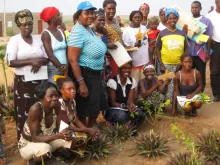
One of the communities she worked with was in Sungui in Bengo province, about 200 kilometres from Rwanda. The refugee women there lived in isolation, surviving through fishing and small-scale farming near a lake. “They were far from towns,” Kirsti says. “That is how they survived.” They worked hard, but opportunities were limited. Access to health care, education, banking and even local markets was often blocked—not by law, but by lack of awareness. Local communities did not always recognise refugees’ rights, despite Angola being a signatory to The 1951 Refugee Convention.
Local people think refugees do not have rights,” shares Kirsti, “They just overlook them.”
She initiated an agricultural cooperative—bringing women who had been scattered across regions together in one place where farming was possible. Securing land required negotiation with authorities. Financial independence required something even harder: access to banking. “It was about transparency, dignity, and learning,” she explains. “They needed to understand what they earned, what was saved, and how decisions were made together.” Refugee women were selling fish and vegetables. “They were working very hard, but they had nowhere to keep the money.”
No bank meant constant risk. Theft. Loss. Dependence. So she arranged transport to the nearest town so the women could open accounts—many for the first time in their lives.
From there, everything changed.
With bank accounts came basic bookkeeping skills. With stable income came confidence. The cooperative grew, producing maize, vegetables, fruit and fish. Later, Kirsti helped launch a tailoring project after securing donated sewing machines—manual ones, because there was no electricity. The cooperative grew. Women who already had skills trained others, and together they began making school uniforms and bags, selling them to local schools.
Education remained central to her mission. Refugee children in Sungi village were not attending school. Kirsti wrote a small project proposal and secured funding from Shell to build a primary school in the camp.
That school was my initiative,” she says. “I advocated for education.” While construction took time, the cooperative’s income allowed children to attend schools in nearby towns, often staying in Catholic hostels. Women donated food to these schools—closing the loop between livelihood and learning.
Five years later, the cooperative was still running. “It is still there,” she says. “And some women still keep in touch with me.”
For Kirsti, the work was never only economic. Many women carried deep trauma from the violence they had fled. Her role included counselling and psychosocial support.
We had an agreement with UNICEF for a referral system, because I am not a qualified psychosocial or psychological professional. So for more serious cases, we had to refer them to our colleagues at UNICEF Angola for assistance. These were very difficult stories,” she says. “You had to listen, document, and make sure they were protected.”
Some stories still stand out.
In 2007, six Eritrean footballers refused to return home during a match in Angola, fleeing persecution. They hid at UNHCR offices—sick, terrified, exposed. Kirsti was responsible for them. “They suffered from malaria and other illnesses,” she says. “Hospitals could not help.” We also had to ensure their protection. The UN discussed with the Angolan government that they could not be forced to return home. The rest of the team returned, but these six remained.
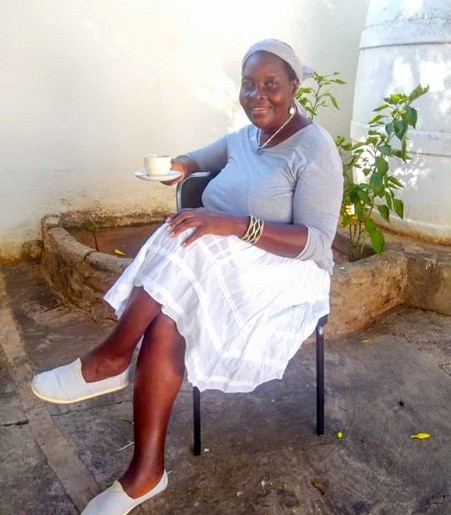
Nearly two decades later, Kirsti has not stopped. “Now, I am leading the Young Men's Christian Association in Namibia, which I helped initiate three years ago. I serve as the National General Secretary.” At the YMCA in Namibia, she’s back working with refugees and young people on the margins.
Her motivation is still the same as it was years ago. “I have a strong passion and compassion for those on the margins of society,” she says. Looking back on her years as a UN Volunteer, she doesn’t soften the truth. She doesn’t romanticize it either. “I feel honoured,” she says. “It shaped me. Professionally. Personally.”
And then she adds something simple—“I really encourage people to become UN Volunteers.” Not because it looks good. Not because it’s safe. But because, as she puts it, once a volunteer, always a volunteer—and some doors stay closed until someone is willing to walk back into danger—and open them from the inside.
Photo: Kirsti Mukwiilongo in Windhoek, Namibia, April, 2026.
This story was also published on UN.org.