



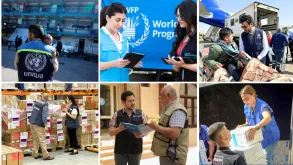
Two years into the war in Gaza, where tens of thousands have been killed and nearly the entire population displaced, the world has grown weary. But not the volunteers.
They remain.
Since the war started on 7 October 2023, 65 UN Volunteers and 75 Online Volunteers have served with the Gaza emergency response. As World Mental Health Day approaches, we reflect not only on the profound toll of these past two years on civilians, but also on the volunteers who have stood steadfast in their service.
Wesal Abu Hamad, a UN Volunteer Humanitarian Field Support Assistant with the UN Office for the Coordination of Humanitarian Affairs (OCHA), was in Gaza when the war erupted.
On 10 October 2023, Wesal shared from the war zone: “When you experience a single disaster, it tends to become magnified in your mind. But when you experience consecutive disasters, your brain goes into shock. It goes blank and cannot process what is happening. Maybe after this war ends, we will process all this and recognize what we went through.”
Even after the evacuation from Gaza, Wesal didn’t stop. From Cairo with the World Heath Organization (WHO), she reported in January 2024: “I have been in Cairo for a couple of weeks now, but I keep myself occupied with my work because I can’t imagine myself away from Gaza. I am trying to evacuate my family and then I will plan my return to Gaza. I live in constant disbelief, I can’t unpack the few personal belongings I brought with me in my laptop bag because emotionally I can't settle, I can’t sleep on a bed, I want to remain in the temporary phase until I reunite with my family and then return to Gaza.”
UN Volunteers have not only supported the delivery of food, shelter, and trauma care—they’ve also endured their own trauma, often without pause. Their mental anguish is real.
Tasneem Aboalkomboz, a general physician and UN Volunteer, presently serving as a Project Coordinator Assistant in Gaza with the United Nations Development Programme (UNDP) Programme of Assistance to the Palestinian People, confides: “Working during war means we are constantly under pressure, emotionally and physically. Mental exhaustion, both from the intensity of the stories we witness and the fear for one’s safety.”
UN Volunteer Wafa Aldeek, a Contributions Officer with the United Nations Relief and Works Agency for Palestine Refugees in the Near East (UNRWA), carries the weight of loss: “I face significant challenges during my assignment, particularly the emotional stress of losing a teammate in Gaza.”
And Asmaa Ma'rouf, UN Volunteer Geographic Information Systems Specialist with the UNDP Programme of Assistance to the Palestinian People, speaks with haunting clarity: “In this war, every day I say: 'Once the war is over, I will...' then I fall silent because I do not know if I will remain alive or not...In this war, what can I say more! It might be the last I witness, who knows…” When the war began, she was forced to flee her home along with her children.
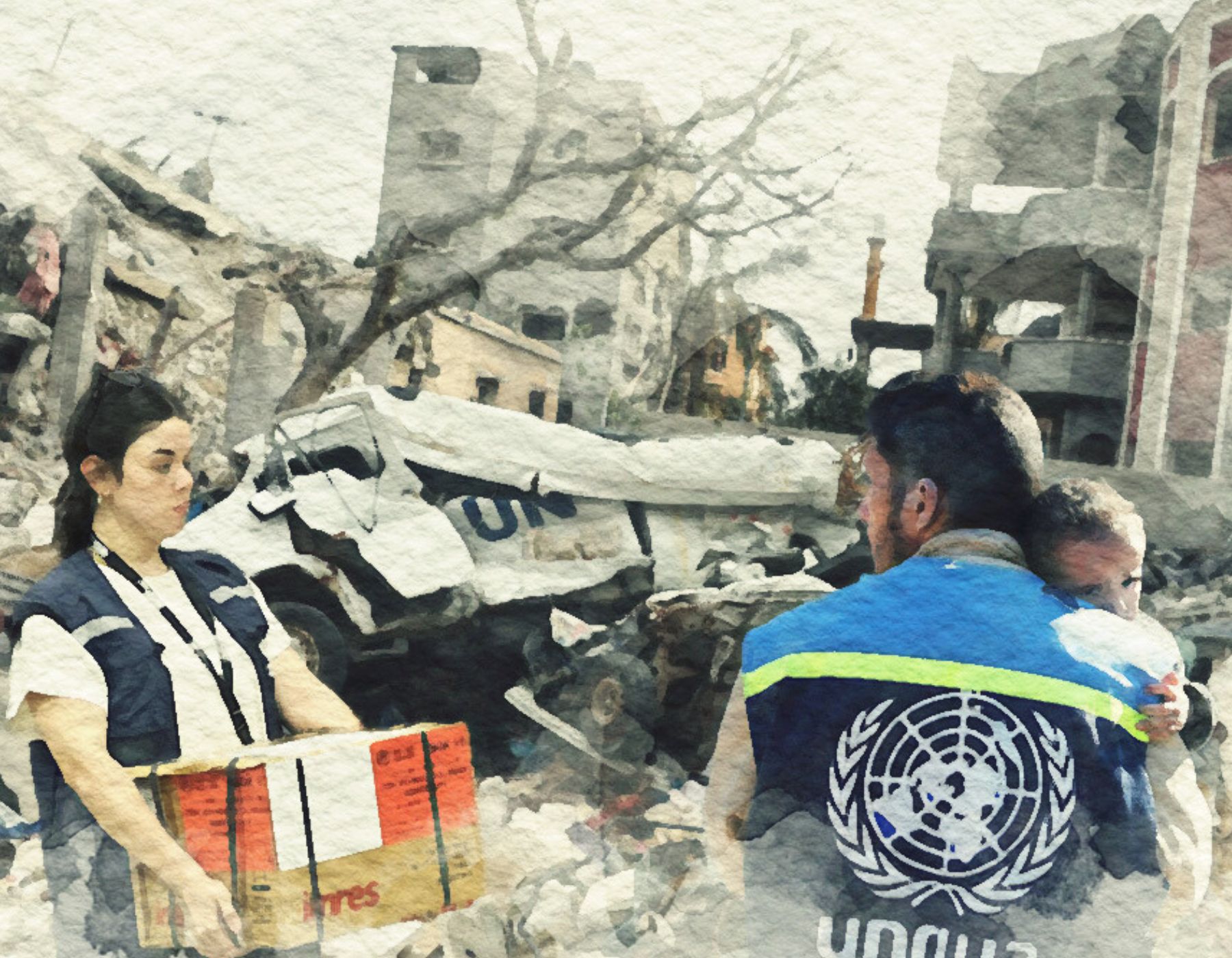
The images from Gaza are more than scenes of devastation—they are mirrors of our shared vulnerability, reminding us that mental health is not a luxury, but a universal human right—fragile, essential, and too often forgotten in times of war.
For more information about UN Volunteer assignments for Gaza emergency response and beyond, click here. To read our stories, click here.