



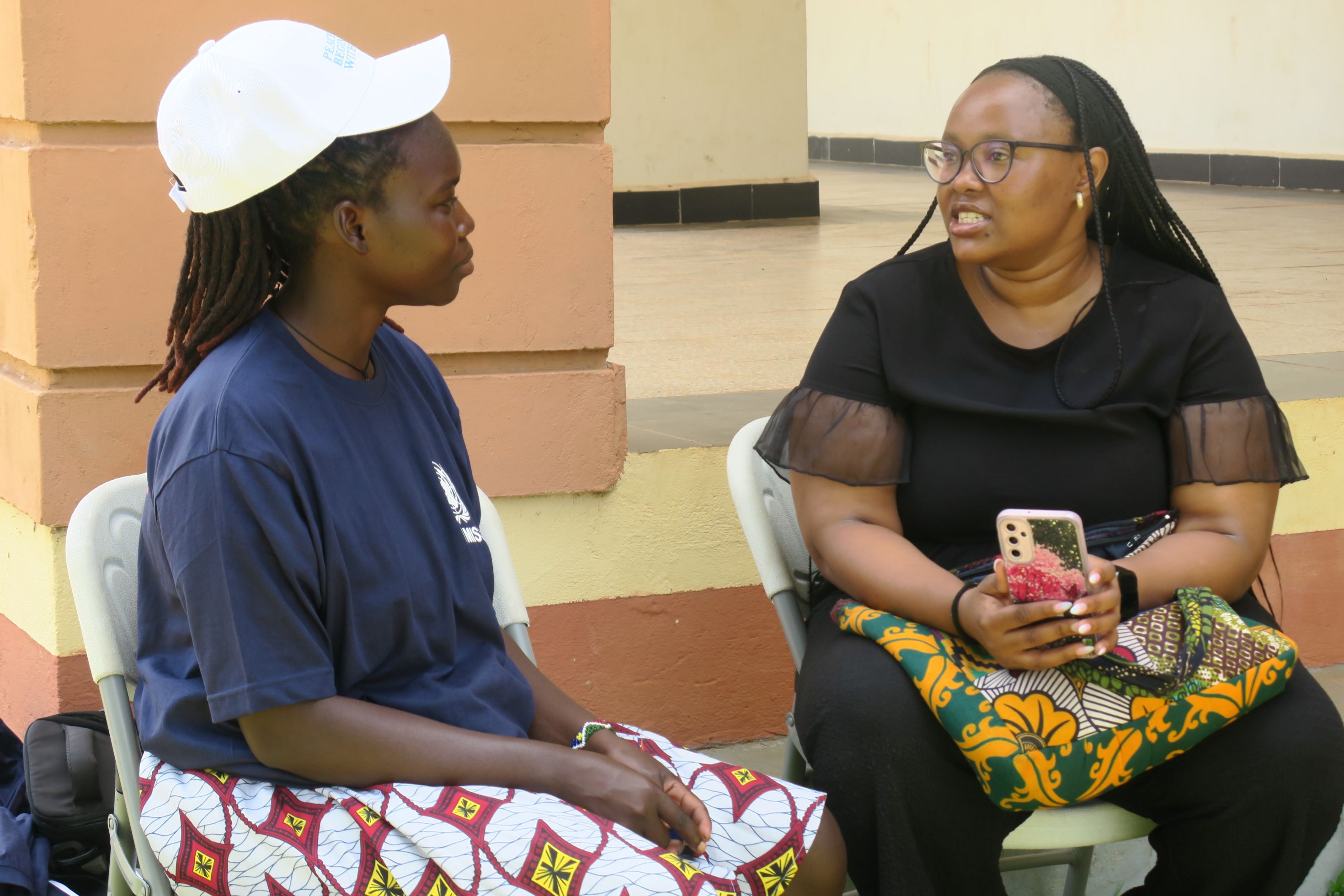
My name is Matiisetso Jeannet Mosala. I come from Lesotho, and I work where peace is not an idea but a daily negotiation. I serve as an international UN Volunteer with the United Nations Mission in South Sudan (UNMISS), based in Torit, Eastern Equatoria State—far from conference rooms, close to consequence. I am a Public Information Officer, but when people ask what I do, I tell them this: I help people understand each other before misunderstanding turns into violence.
South Sudan is still learning how to live after years of conflict. UNMISS supports that fragile process—protecting civilians, enabling humanitarian access, advancing human rights, supporting political dialogue, and helping prepare the ground for elections. My work lives inside that reality, not outside it. I lead the Communications and Public Information Office in Torit, the state capital, about 90 miles east of Juba and just miles from the Ugandan border.
Here, words matter. Stories matter. Silence matters. Every message we put into the public space can either calm tensions or inflame them. My job is to make sure it does the former.
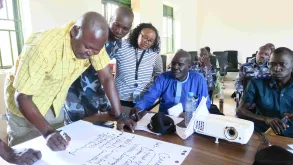
Much of my volunteer service centers on conversation—explaining the mission’s role while also listening carefully to how communities experience daily life. Every week, I meet youth groups, local leaders, women’s associations, faith leaders, government officials, and journalists. Some meetings are formal. Others happen under trees, in community halls, or during field visits.
People ask direct questions. They want to know what the UN can do and what it cannot do. Managing expectations is as important as sharing information. In places affected by communal tensions, conflict, and displacement, information carries weight. Rumours travel fast. Misunderstandings grow quickly. Clear communication can reduce fear before it becomes conflict.
I organize outreach activities and public events throughout the year. International days such as Peace Day, Youth Day, International Women’s Day, and Peacekeepers Day become opportunities for dialogue rather than celebration alone. These gatherings allow communities to speak openly about challenges they face.
Radio remains one of the strongest connections between the mission and communities. I produce and contribute programmes for the mission's Radio Miraya. Many people rely on radio more than social media or television. Each story must be verified carefully. Accuracy builds credibility. My work also takes me across Eastern Equatoria State. The roads are demanding, especially during the rainy season when mud and flooding slow movement. Patrols take long hours. Plans sometimes change without warning because security situations shift. Flexibility becomes part of daily routine.
One assignment remains vivid in my memory. I interviewed young people enrolled at the Torit Vocational Training Centre through the UNMISS-supported Community Violence Reduction project. Some had previously been involved in gang violence. Others were former combatants. They spoke about learning practical skills and imagining different futures. Their openness stayed with me. It showed how small opportunities can redirect lives.
Advancing women and youth participation is also central to my work, especially as we mark International Women’s Day—a moment to recognize not just women’s rights, but women’s agency in peacebuilding. Women are not just beneficiaries of peace—they are its architects.
I helped support the Coffee Forum organized with the Eastern Equatoria Women Association, where women gather to share coffee and mandazi and discuss how they can contribute to resolving local conflicts. The setting is simple, but the discussions are serious. I watched women move from quiet observers to active voices in community decision-making.
Over time, I built a wide network of contacts across the state. These relationships matter more than any equipment or platform. Information flows because people trust one another.
And trust cannot be rushed. It grows through consistency and respect.
The impact of my work appears in many small ways. Communities gain platforms to raise concerns. People hear verified information instead of rumours. Local discussions become more constructive. At the same time, outreach activities help communities better understand what UNMISS is doing and why.
Recognition from colleagues encourages me to keep improving. Patricia Okoed, Head of Programmes at Radio Miraya, once told me, “You are doing really well in Torit. Your timely production, editing, and fact checking make our work easier.” Hearing that affirmed the discipline behind daily communication work.
Fieldwork also comes with its share of challenges. Poor road conditions can slow movement, security situations can change rapidly, and activities planned for weeks may need to be cancelled overnight. These experiences have taught me adaptability and resilience—the work continues even amidst uncertainty. I was honoured when fellow volunteers selected me as the UNV focal point for my state, and I also serve on the welfare committee. Through these roles, I am able to support my colleagues and strengthen the volunteer community beyond my formal responsibilities.
Living and working in South Sudan changed how I see the world. I witness resilience every day. Communities continue rebuilding relationships despite hardship. People choose dialogue even when disagreement exists.
Volunteerism, for me, means showing up consistently. It means contributing skills where they are needed and learning from the people you serve. Through this experience, I grew professionally, but more importantly, I learned to listen differently.
Many people imagine international work as distant or formal. My experience has been much more ordinary. It happens through interviews, community discussions, radio broadcasts, and long journeys to places rarely seen by outsiders. Progress often looks quiet. A meeting that ends peacefully. A rumour corrected before it spreads. A young person deciding on a different path.
Serving as a UN Volunteer in South Sudan is something I carry with deep gratitude. The work does not belong to one person or one institution. It belongs to the many people who continue choosing cooperation, conversation, and patience every day.