



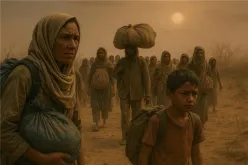
In the Middle East and North Africa (MENA) region, where migration, conflict, and climate change collide, some communities face more danger than others. Displaced women, children, older people, and persons with disabilities are often hit hardest—and left out of national plans, climate solutions, and efforts to build global resilience. That’s why inclusion isn’t a nice-to-have—it’s a must. With support from the Special Voluntary Fund (SVF), UN Volunteers Jahidul Islam and Hiba Drizi are making sure crisis response and protection systems across the region don’t leave anyone behind.
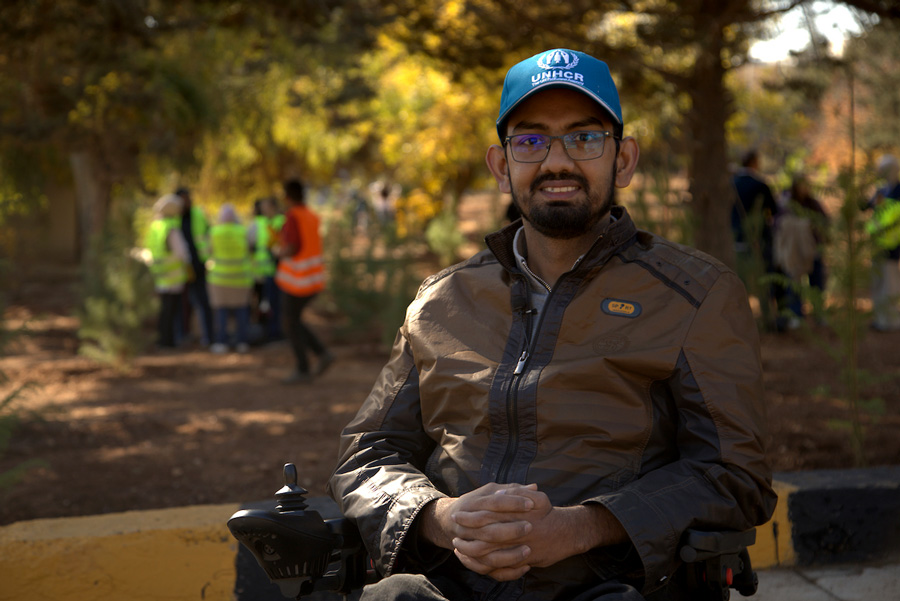
In the MENA region, climate change is intensifying existing hardships—shrinking food and water supplies and deepening instability for communities already displaced by conflict. Enter Jahidul Islam: a Bangladeshi climate and disability inclusion expert who brings both technical insight and lived experience. He is a wheelchair user who has faced structural barriers firsthand.
Climate resilience for displaced people is not just a technical goal, but a justice issue. It requires amplifying local voices, especially of the most vulnerable, and ensuring that international climate financing does not leave displacement contexts behind."
Now based in Amman, Jordan, he serves as a UN Volunteer Partnerships Officer for Climate Action with the UN Refugee Agency (UNHCR) MENA Regional Bureau. Jahid is helping develop the region’s first Climate Action Strategy—a bold shift from reactive aid to long-term resilience. He also co-developed the Natural Hazard Analysis Tool, which supports early action in climate-vulnerable countries like Jordan, Mauritania, and Yemen.
Each day, Jahid supports adaptation strategies, integrates climate risk, and works on funding proposals to global donors like the Green Climate Fund. Even though most of his work happens behind the scenes, it’s essential for making sure those most at risk aren’t left out when climate funding is planned and put into action.
Migration in Morocco is complex—and for many women, arrival marks the start of a new struggle. Healthcare systems are often unfamiliar and unprepared for their needs. As a UN Volunteer with the International Organization for Migration (IOM), Hiba Drizi is a Gender Equality Advocacy Officer and focuses on the access of migrant women to maternal health and protection services.
In April 2025, she led a gender analysis session during the Reflection Workshop on Access to Childbirth for Migrant Women in Morocco. With 40 participants—including government officials, healthcare providers, and civil society actors—the workshop identified key barriers, such as administrative red tape, financial stress, and social stigma. But insights didn’t stop at discussion. Hiba’s recommendations included better coordination between health services and migrant support organizations, and a targeted training for medical staff in gender- and migrant-sensitive care.
Hiba also created a roadmap to make sure gender and disability inclusion are key aspects of IOM Morocco’s work.
One initiative I’m particularly proud of is a training session we held on disability inclusion. It focused on practical ways to make our programmes and work environment more accessible."
Through the National Forum of Medical and Social Assistants, Hiba helped train more than 130 frontline professionals on gender-based violence and inclusive health strategies, equipping them with the tools to better serve migrant communities.
Leaving no one behind isn’t just a UN slogan—it’s what volunteers like Jahid and Hiba do every day. In tough conditions, they help make inclusion real: in the systems we build, the choices we make, and the future we shape together. On World Humanitarian Day, we honour their compassion and commitment—and the power of volunteering to make inclusion a lasting part of the UN’s work.