What does it really take to build a career inside the UN system?
Svenja Meyer, a Junior Professional Officer (JPO) with United Nations Volunteers (UNV) Regional Office in the Arab States, reflects candidly on her journey so far. Interviewed by the United Nations Development Programme (UNDP), she speaks about ambition and what the system demands—and gives back. Below are excerpts from the interview.
What is your educational background?
I have a bachelor’s degree in Russian Studies/Political Science and a master’s degree in International Relations with focus on conflicts and transformations in the Middle East.
What made you apply to the JPO programme and what is your motivation to work with your UN agency?
My educational background in the Middle Eastern region made me apply for this particular position. Since I am based with UNV’s Regional Office for Arab States, my background helps a lot. During both my bachelor’s and my master’s studies, I was able to spend a lot of time abroad, interning with NGOs, the German government, and UNDP, and it was always my ambition and a great desire to work for the UN at some point.
My position has a large analytical component, looking at dynamics in the region and anticipating priorities for humanitarian assistance, development collaboration and programming of UN agencies. I was eager to return to the region since I had spent a part of my master’s studies there, too, and I was excited about the role since it allows me to apply a lot of what I was working on during my master’s.
What are the main activities and tasks you are working on? What is a day at the office and in the field like?
What is beautiful about my role is that it has a lot of variety. One part of my responsibilities is analysis: looking at funding streams, donors’ priorities and emerging opportunities for UNV’s partnerships with donors and partners and providing guidance to UNV’s country offices in our region. The role does as well have an outreach component: based on my analytical work, I draft offers for UNV’s partners and proposals for collaboration. Together with colleagues, we organize webinars and information session for partners in order to develop and discuss collaboration in humanitarian assistance, development collaboration and specific subtopics such as disability inclusion or food security. I do as well manage 3 of UNV’s country portfolios in Western Sahara, Yemen and Djibouti, representing UNV in meetings with UN partners, the government and civil society, and working on country-specific programmes.
In your day-to-day work, what SDG(s) are you helping to implement?
Sustainable Development Goal 17—partnerships for the goals. However, UNV, in partnership with other UN agencies, works across all the SDGs. Through my work, building partnerships across the UN system, I support partners in implementing the SDGs overall.
What is the most challenging project that you have worked on or are working on?
Establishing new partnerships or convincing established partners of new and innovative approaches is always very challenging, especially when conversations do not happen in person but online. This is a challenge that comes with me being based in UNV’s Regional Office in Amman, whereas my country portfolios are Yemen, Djibouti and Western Sahara.
Each partner is looking for something very specific in our partnership and requires individual solutions, so it is about understanding my counterpart’s background and programme in detail and to communicating UNV’s added value to very specific challenges.
Additionally, the global dynamics affecting the UN system, uncertainty with regard to funding of future activities, is of course being felt in my engagement with partners.
What has been the most rewarding experience to date for you at your duty station?
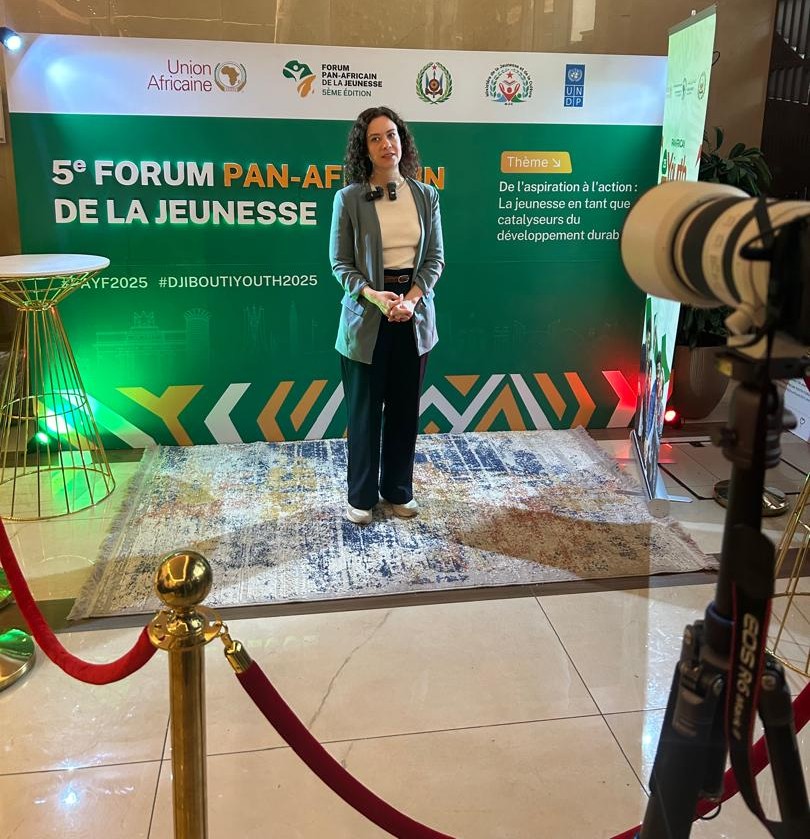
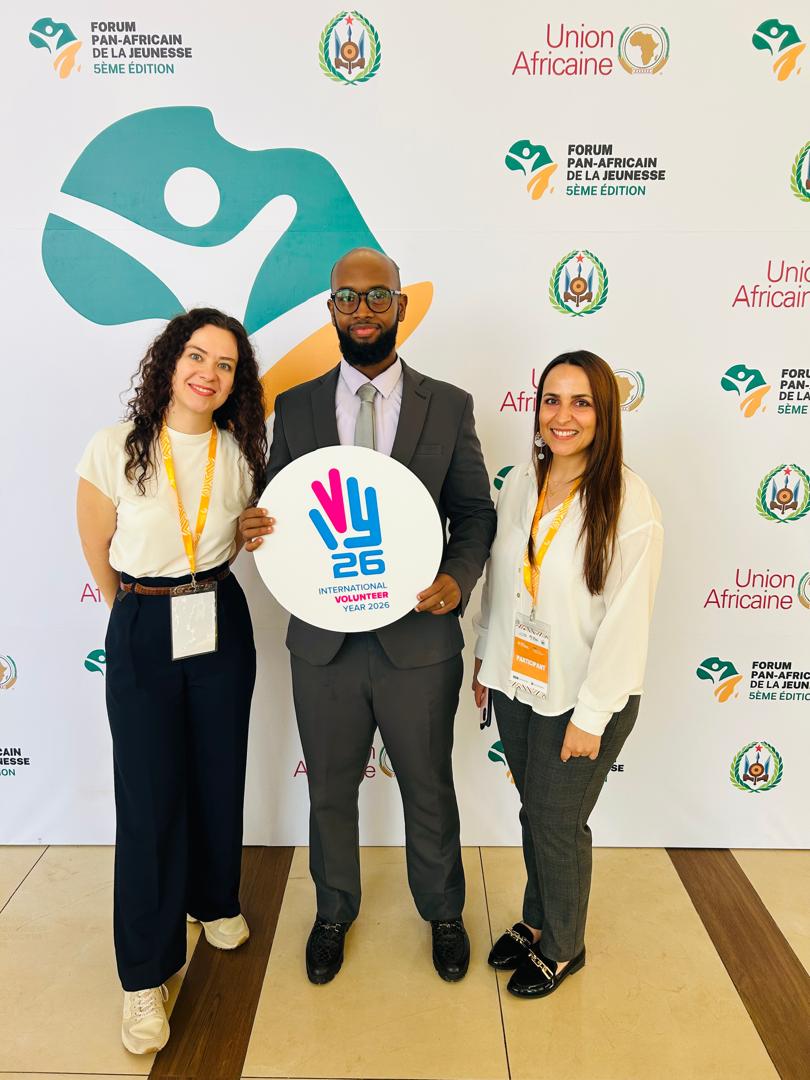
Organizing UN Volunteers support to the Pan-African Youth Forum in Djibouti, to UNDP and to the Ministry of Youth. Through UNV, we could deploy 18 young people, volunteers, from Djibouti to support this big event in preparation and rollout— allowing them to be part of policy development and agenda setting together with relevant political stakeholders, such as the Djiboutian minister of youth and international guests. I was proud to be part of a panel speaking about the potential of volunteerism, building on career development, hoping that many of the UN Youth Volunteers were as well inspired to pursue a career in international development through their participation in the event. I was speaking from the heart, being a former participant of the European Voluntary Service Programme that joined the UN at a later stage.
The feedback that the young participants shared after the event was moving, convincing me that UNV does make a difference in the lives of young people, encouraging them to participate in policy-making and giving them a sense of agency.
What set of skills have you developed most throughout your assignment?
Proactiveness, persistence and communication skills – including active listening which I feel is crucial for forging productive and sustainable partnerships.
What piece of advice would you give to those who are considering applying to the JPO Programme?
The JPO Programme is not only a career opportunity – it will introduce you to wonderful, curious, very skilled people from across the world. Build networks and exchange knowledge, experience and advice. Those are the people who will support and guide you through challenges and who will celebrate your wins with you.
My advise to those embarking on the JPO Programme is stay curious, take setbacks as opportunities for growth and find sense of purpose in what you do.
How do you feel your JPO assignment will influence your career choices and opportunities within the UN?
I am lucky, my assignment exposes me to a lot of different stakeholders and UN organizations. It helps me to understand the development and humanitarian landscape: What skills are needed, what support are agencies looking for? In which country contexts? As well, I am building personal connections to colleagues across the system that can turn to for advice and support.