



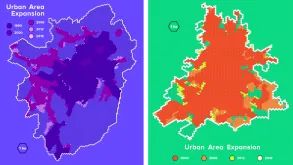
A Geographic Information Systems (GIS) Specialist, Andrii Nahornyi, transforms complex data into sharp, visual stories that drive real-world decisions. He has a degree in Geomatics and a background in spatial data analysis, cartography, and remote sensing. In 2025, Andrii joined the United Nations Development Programme's City Experiment Fund as an Online Volunteer, helping cities across Europe and Central Asia reimagine urban life. His GIS skills-powered projects are enhancing urban development—one map at a time.
Andrii began his assignment by designing a strategic plan focused on the geospatial component of the project, researching each participating city’s geographic, historical, and socio-economic context. This helped him gain a deeper understanding of the forces shaping urban development.
"Once the groundwork was laid, I began sourcing data—vector, raster, and statistical—while organizing everything in a way that would support efficient geospatial analysis. This step was more than just data management; it was about building a foundation for meaningful insights," shares Andrii.
I quickly learned that even the most advanced tools are only as useful as the data behind them. Accuracy, relevance, and consistency became my guiding principles.
"The heart of my work was the geospatial analysis phase," says Andrii as it required careful selection of analytical methods supported by academic literature and technical expertise.
He adds, "Using both Esri ArcGIS and QGIS, I examined everything from land use and elevation to traffic patterns and wildfire exposure. The final and most rewarding phase was visualizing these insights through maps, turning raw data into accessible, visually compelling tools that could inform real-world decisions. In total, we created over 50 detailed maps, accompanied by a comprehensive report explaining our methodology, findings, and recommendations."
However, the journey was not without its hurdles. The greatest challenge was sourcing reliable, up-to-date, and publicly available geospatial data. Andrii says that GIS analysis is only as strong as the data it relies on, and ensuring objectivity and accuracy meant long hours combing through local databases, translating government records, and verifying open-access datasets.
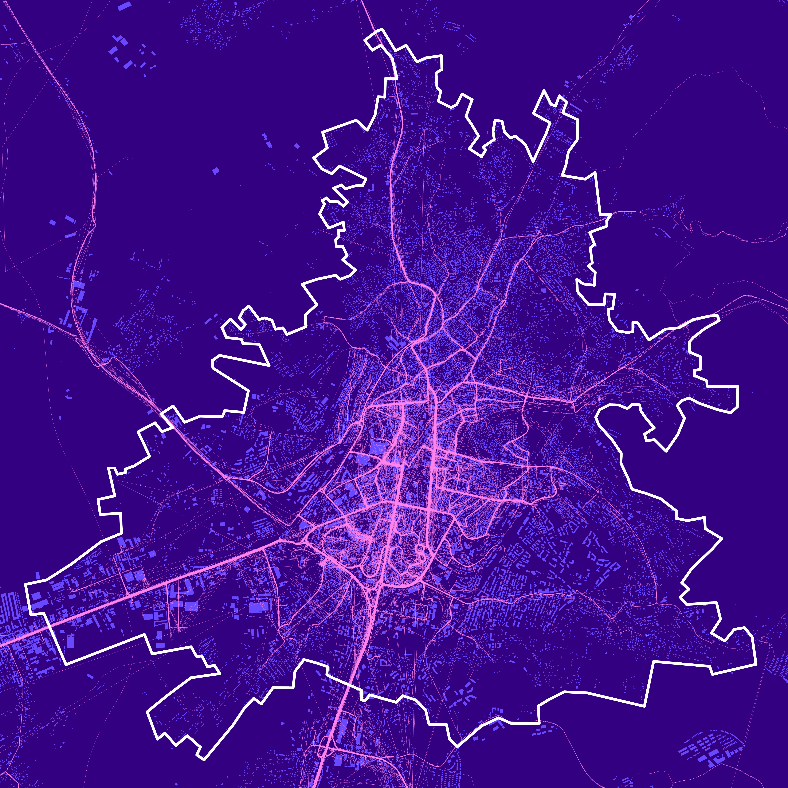
"One of my favorite outputs was the Movement Patterns Map of Pristina. Due to a lack of comparable data from other cities, this map stood out," adds Andrii. "It vividly captured how people navigate the capital, with contrasting lines revealing traffic flow, activity zones, and urban hotspots. This map provides an excellent basis for further analysis and decision-making, such as the development of public transportation in areas of heavy traffic congestion or the development of new businesses in areas of high activity."
The cities we worked with—Gostivar, Tashir, Kovel, Pristina, Nizhyn, Pljevlja, Obiliq, Kavadarci, Podgorica, and Stepanavan—may differ in size, location, and background, but they all share one thing: immense potential. In every dataset and on every map, I saw evidence of resilience, growth, and opportunity.
This project reminded Andrii that volunteering is not just about giving time, it’s about growing together, learning from each other, and building tools for change.
He concludes, "I look forward to seeing how these cities grow—and I hope our paths cross again in the future."