



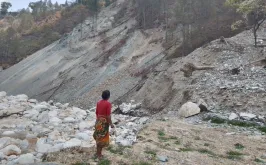
When record-breaking rains hit Nepal in September 2024, floods and landslides swept across the country, affecting over 70,000 people and claiming more than 225 lives. Over 1,500 public buildings were damaged. As the crisis unfolded, 16 UN Volunteers rushed to the hardest-hit areas. They gathered critical data, managed the flow of information, and helped coordinate relief efforts. These young humanitarians didn’t just deliver aid—they brought back hope and helped communities rebuild the damaged infrastructure.
Among them was Hotrika Joshi, a UN Volunteer with the United Nations Development Programme (UNDP), who was based in Roshi Rural Municipality in Kavrepalanchok District, where ten lives were lost and hundreds of homes and farmlands were destroyed.
Shantu Maya Lama is one of the victims of the floods. “Can you trace the site of my house?” she asks, pointing to a door lying in the middle of the floodplain about 100 meters away, which she claims was the entrance to her home.
Hotrika began working directly with local communities to understand what they needed most. Her role wasn’t just about recording damage to homes, roads, and public buildings—it was also about capturing how the disaster affected daily life, from access to food and clean water to transportation and mental health.
As the government introduced financial aid, Hotrika helped gather the information needed to allocate temporary shelters, making sure the most vulnerable families received support. “Recovery isn’t just about rebuilding walls,” she says. “It’s about restoring dignity, resilience, and trust.”
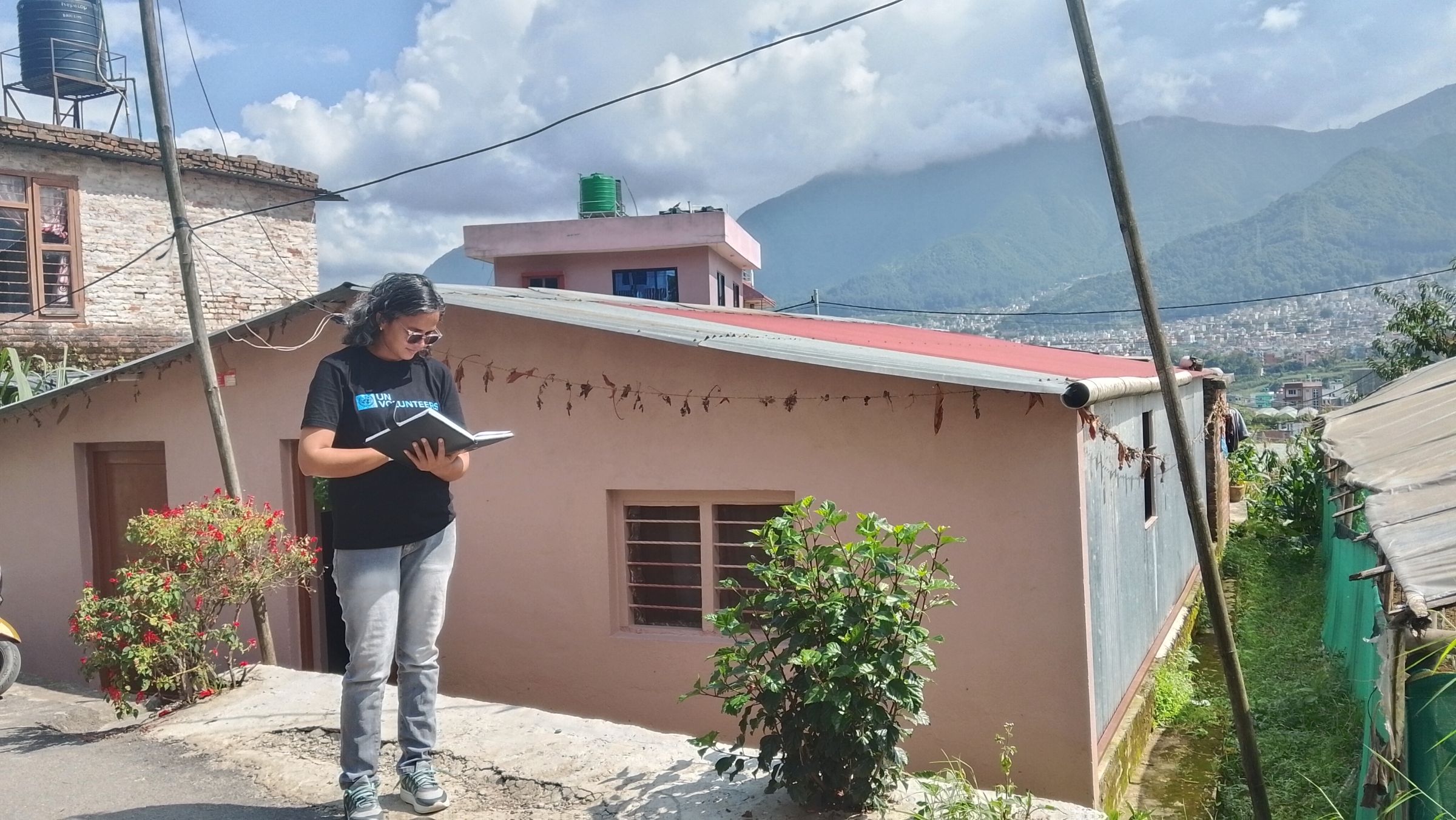
“Young people can see what’s happening on the ground and help translate it into long-term solutions,” Hotrika shared in her final report. “We need to engage more youth in humanitarian work not just for immediate response, but to reshape recovery systems that are inclusive and just.”
As Nepal works toward becoming more resilient to disasters, the experience of UN Volunteers like Hotrika highlights the power of young people to lead communities through crisis and into recovery. Her efforts helped improve daily life in affected communities and supported Sustainable Development Goals, such as building safer cities, taking climate action, and strengthening public institutions.
“Volunteering gave me a platform to serve,” Hotrika says. “But more than that, it gave me a reason to believe that change is possible—even after disaster.”