



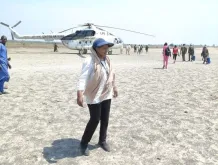
The circle is small but tense. We are sitting under a tree in a village in Unity State, South Sudan. Men, women, and youth lean forward on low stools. Some carry anger in their voices as they speak of cattle taken in raids. Others speak quietly about children forced into early marriages. A young man stands to confess he fears retaliation for a revenge killing.
In moments like this, my role is not to lecture or impose. It is to listen, to ask questions, to remind the group that within their own customs and traditions lie paths to peace. I have learned that people want solutions to come from themselves. My job is to create the space where that feels possible. By the end of that day, nothing dramatic had shifted. No handshake sealed a deal. But the room felt lighter. Neighbours who had stopped speaking to each other had looked one another in the eye. And for me, that was enough to keep going.
Serving as a UN Volunteer Civil Affairs Officer in South Sudan means stepping into an environment where peace can never be taken for granted. Unity State and the Ruweng Administrative Area are marked by shifting conflicts. One week it may be cattle raiding. The next, a dowry dispute spirals into violence. Floods and droughts deepen hardship, adding to the tension.
Every conversation I join is shaped by these realities. And yet, even in the most volatile situations, communities hold resources of their own. Elders carry wisdom. Youth bring energy. Women insist on being heard. Faith leaders remind people of shared values. I try to weave these threads together, knowing that no outside actor can substitute for what communities themselves bring.
Peacebuilding here is never quick. I have sat in circles where anger boiled over, where people stormed out, where hours of talking ended with silence. Resolutions are not always implemented. Agreements fall apart. At first, I used to feel defeated. I thought my efforts should equate to results. But I have come to see peace as a long road. Sometimes you walk only a few steps in a day.
What matters is that the path remains open. Each attempt at dialogue plants a seed. Even if it does not sprout immediately, it may take root later, when the ground is ready. One of the proudest moments in my work was seeing stakeholders I had once trained step up to lead their own dialogue.
They no longer needed my facilitation. They owned the process. That is how I know the work leaves something behind. The greatest lesson South Sudan has taught me is patience. Conflicts shift constantly. What worked in one community may fail in the next. Strategies must adapt. There is no single formula.
I have learned to let go of rigid expectations and instead pay attention to the people in front of me. Listening carefully reveals early signs of conflict. Acting on those signs, even quietly, can prevent violence from escalating. Progress here is not measured in big announcements. It is measured in days when a market stays open, when a girl remains in school, when neighbours choose to sit and talk instead of fight.
Volunteering, for me, is not about giving what I have in excess. It is about showing up with openness, even when the work is heavy. It has been humbling to see communities struggle and still insist on hope. This role has stretched me in ways I did not expect.
I have gained new skills, yes, but more than that, I have gained a deeper respect for the quiet courage of ordinary people. I have seen how a single voice can shift an entire dialogue. I have seen how persistence, even in small steps, saves lives.
I think of the circles I have joined under trees, in halls, in open fields. They remind me that peace does not come only from agreements signed in faraway capitals. It grows in conversations that take place at the heart of communities. Peace is built by people, not by buildings. Institutions provide frameworks, but it is individuals—community members and volunteers alike—who keep peace alive. It is a culture, one that must be nurtured daily. Cultivating peace means shifting old narratives. It also means challenging traditions that harm, while drawing strength from those that heal. It is slow work, fragile work, but also deeply human.
The conflicts in South Sudan will not vanish overnight. New challenges will arise. Old grievances will resurface. But each circle of dialogue, each conversation, each act of courage adds to the whole. And I believe, as long as people are willing to sit together and speak, the path to peace remains open.
I am Emily Kabuga from Kenya, a UN Volunteer in South Sudan and this is why I volunteer—for the circles of peace!
For more information about UN Volunteer assignments and how you can get involved, click here. To read our stories, click here.