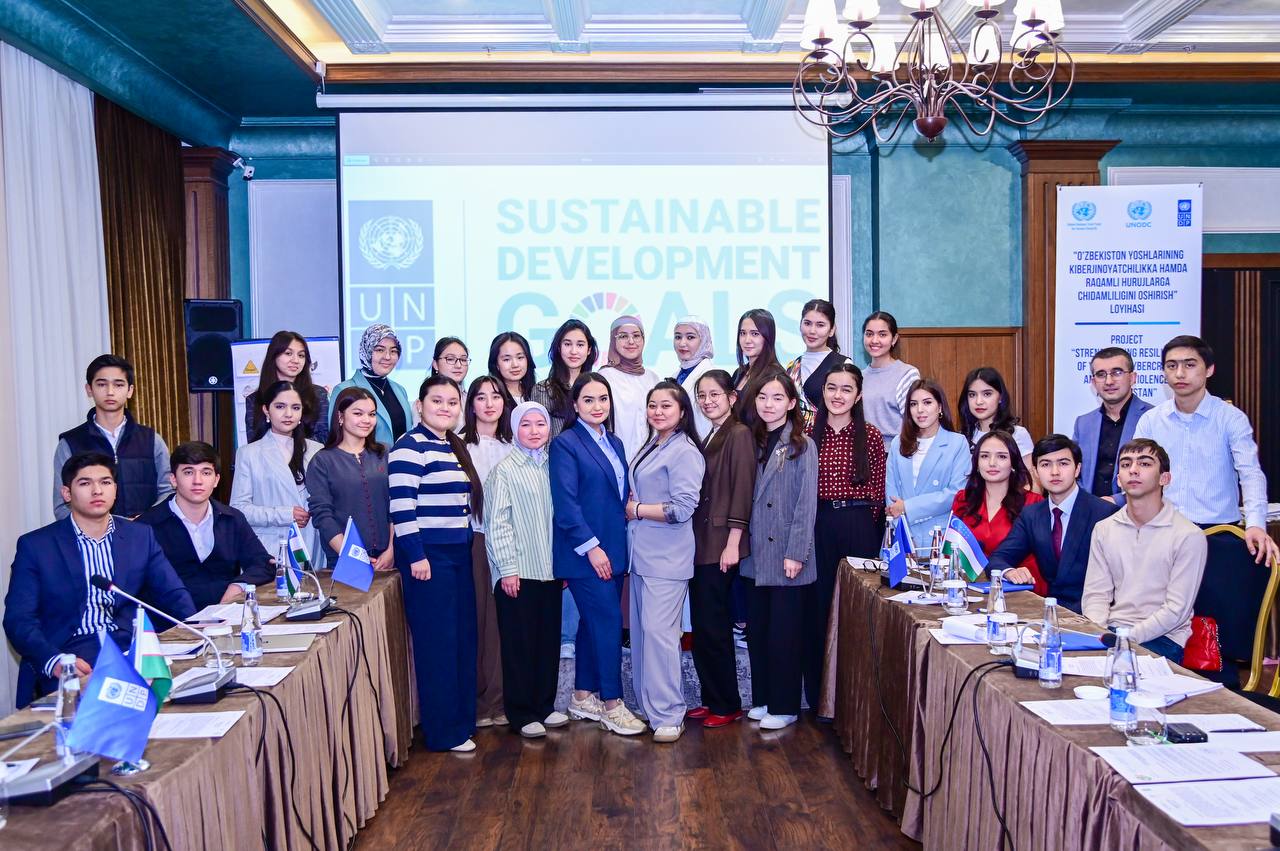
In Uzbekistan the number of cybercrimes has increased more than 12 times since 2021, rising from 4,865 to 62,440 cases. Behind these numbers are real people navigating online spaces without always knowing how to recognize risks, protect their data, or respond to digital threats.
The Cyber Safety project was implemented by the United Nations Development Programme (UNDP) in Uzbekistan together with the United Nations Office on Drugs and Crime (UNODC) Regional Office for Afghanistan, Central Asia, Iran and Pakistan, with support from UN Volunteers, to help people stay safe online and respond to growing cyber threats.
Through awareness sessions and community outreach, volunteers helped people across Uzbekistan better understand digital risks and protect their rights online. The first article on this topic included the experience of UN Volunteer, Umidjon Khujabekov, and his contribution to promoting safer digital spaces. Now, four more UN Volunteers reflect on the moments that showed them the real impact of their work.
Lazzatoy Shukurilloyeva is a university student whose main areas of interest closely align with the goals of the Cyber Safety project. Believing that technology and education can change lives, she joined the initiative to help make the digital world safer for others. She supports awareness activities to promote online responsibility and cyber awareness among young people.
“I told them to use technology wisely to protect their identity. Every click carries responsibility,” shared Lazzatoy.
Many participants later shared what they had learned with family members by teaching them about privacy settings and online safety. This showed how the project reached far beyond its initial audience. Lazzatoy notes, “Awareness is a spark that can reach millions after just a single workshop.”
Javoxir Alokulov, a Business Law student at the National University of Uzbekistan, believes that digital safety is an essential skill in today’s world, one that can and should be taught.
Like many other UN Volunteers involved in the Cyber Safety initiative, he conducted outreach activities and explained online risks in accessible ways. One of the most memorable moments for him came when participants shared that they had changed their online habits after learning more about cyber risks.
“Think before you click, protect your data, and take responsibility for your digital actions,” noted Javoxir.
This volunteering experience helped him strengthen his communication skills and improve his ability to work effectively in a team. Javoxir notes that while he had always been socially conscious, the Cyber Safety project further expanded his sense of responsibility.
When joining the project, Sabrina Shamuratova, a student at Tashkent State University of Law, already had a strong desire to help people navigate the growing challenges posed by online threats. She supported her team in preparing educational materials. For Sabrina, one of the most rewarding parts of the experience was seeing how knowledge could influence everyday behaviour and help protect people’s futures.
For Lazizbek Xamdam, a student of International Relations at the Uzbekistan State World Languages University, the Cyber Safety project became an opportunity to combine academic knowledge with practical action.
“Seeing how genuinely interested people were in learning how to protect themselves online touched me deeply,” explained Lazizbek.
While each volunteer journey is unique, many young people find themselves through experiences like these, sharing knowledge and supporting members of their communities. The Cyber Safety project became a bridge between knowledge and everyday reality.
Through conversations, awareness campaigns and simple acts of support, UN Volunteers are helping build safer, more informed digital spaces—one click, one conversation, and one community at a time.