



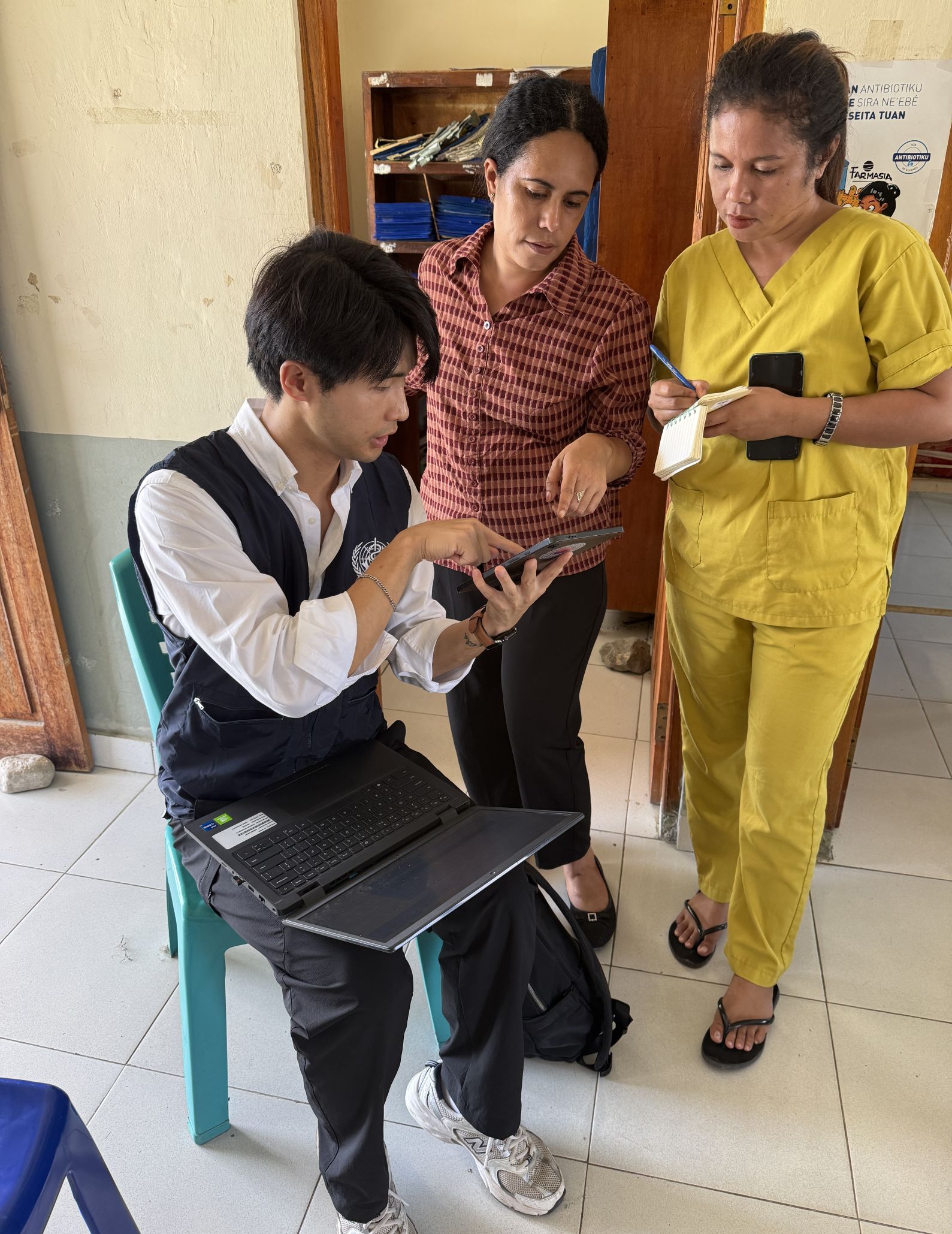
"The most rewarding part of my work is knowing that what we build today will continue to protect people's health long after we're gone. That's what makes serving with WHO so meaningful,” says Seontae Kim, a Public Health Surveillance and Intelligence Officer in WHO Country office for Timor-Leste.
Seontae Kim is among the 14 UN Volunteers currently working as part of the World Health Organization (WHO) teams in Bangladesh, India, Myanmar, Sri Lanka and Timor-Leste. They contribute to programmes ranging from disease surveillance and emergency preparedness to mental health, communications, human resources, water, sanitation and hygiene (WASH), and resource mobilization. Their work builds on a global partnership between WHO and UNV that dates back to 1973 and has created meaningful opportunities and delivered results for more than five decades.
The WHO South-East Asia Region has over the years welcomed new cohorts of skilled and motivated volunteers, working alongside staff, Ministries of Health and partners across a wide range of technical and operational functions that reflect the breadth of WHO’s work.
"Our partnership with UNV gives WHO the flexibility to respond to countries' evolving needs by drawing on skilled professionals with diverse expertise and experience. Over the years, these volunteers have become a valued part of our teams, helping us deliver stronger support to Member States across the Region," says Hussain Rasheed, Chef de Cabinet, WHO South-East Asia Regional Office. "As our work continues to evolve, this partnership will become even more valuable."
Among the volunteers making a difference is Seontae Kim, a Korean UN Volunteer with an assignment funded by the Republic of Korea.
Preparing for tomorrow's health threats
When an outbreak occurs anywhere in the world, countries need to be ready to detect and rapidly respond to any case of importation. Working with WHO and Timor-Leste's Ministry of Health, Seontae is helping develop standard operating procedures for disease surveillance at points of entry, strengthening the country's implementation of the International Health Regulations 2005. The procedures guide health authorities on how to identify, investigate and manage suspected cases among travelers, ensuring a rapid and coordinated response when every minute counts. "When a disease signal appears, everyone needs to know exactly what to do, who to notify, what information to collect and what the next step is," he says.
If these procedures are never needed, that will be a success. But should an outbreak risk crossing borders, they will help Timor-Leste detect imported diseases early and respond swiftly to protect public health. "The work I'm doing will stay here even after I leave," says Seontae, adding, "But, of course, I hope no serious public health threat ever requires these procedures to be put into action. But if that happens, we will be ready to respond quickly.”
Volunteers like Seontae offer more than technical skills. They bring an outside perspective that has value in its own right.
“WHO Timor-Leste regularly engages UN Volunteers in a variety of roles. Beyond technical expertise, they bring diverse perspectives and cultural exposure, while working closely with the Ministries and communities,” says Dr Arvind Mathur, WHO Representative to Timor-Leste. “Many learn the local language and develop a strong understanding of the local context, helping bridge technical expertise with realities on the ground, as we have seen in programmes such as school health and surveillance.”
Supporting countries when they need it most
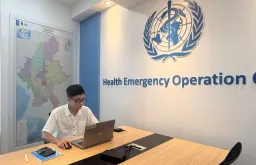
Across the Region, UN Volunteers serving with WHO are making similar contributions in supporting countries to strengthen public health, albeit in very different settings. In Myanmar, in one of the Region's most challenging humanitarian settings, Kyaw Myo Thu, a national UN Volunteer, serves with WHO as an Information Management Officer.
"The data we produce doesn't just sit in a spreadsheet," he says. "It helps our partners reach people they would otherwise miss. I feel proud to provide this support for my country while working in such a challenging situation."
His work enables WHO and its partners to direct limited resources where they are needed the most, coordinate more effectively, and ensure that vulnerable populations are not left behind.
The value of the partnership is equally evident in Bangladesh, where WHO currently hosts ten UN Volunteers—the largest volume in the South-East Asia Region. Serving across technical areas including mental health, WASH, communications, human resources and resource mobilization, they have become an integral part of WHO's work, including its response to the Rohingya humanitarian crisis.
"WHO Bangladesh has hosted UN Volunteers since 2017, and the value they bring has been clear from the start. They have been part of some of our most demanding work, including our response to the Rohingya humanitarian crisis. They are not a stopgap, they are part of how we deliver," says Dr Ahmed Jamsheed Mohamed, WHO Representative to Bangladesh.
Investing in people, strengthening partnerships
For Franclin Tomtebaye Nodjitoloum, serving as a UN Volunteer in 2008 in Guinea, it was the beginning of his professional journey in the UN system. A former UN Volunteer, he is now a Human Resources Officer in the WHO South-East Asia Regional Office. His experience reflects one of the programme’s enduring strengths. Beyond expanding the capacity of the hiring body, the programme provides opportunities for skilled professionals to gain experience in their fields, while contributing directly to the work of the UN system in countries.
"Being a UN Volunteer gave me the opportunity to contribute, learn and grow," Franclin says. "It was a chance to serve communities while growing professionally, and it opened the door to a career dedicated to international development."
As WHO's work continues to evolve in response to new health challenges, the partnership with UNV is evolving alongside it.
“UN Volunteers bring much more than energy and commitment to WHO’s work. They also contribute health-related specialization and professional expertise that strengthens country-level responses. In Asia and the Pacific alone, UNV can draw on a strong talent pool of more than 8,000 health-related professionals ready to support partners where these skills are needed most,” says Christian Hainzl, UNV's Regional Manager for Asia and the Pacific.“We are proud of our long-standing partnership with WHO and look forward to building on it, ensuring that volunteers continue supporting countries and communities where they are needed most.”
This article was originally published on the World Health Organization South-East Asia Regional Office website and was jointly authored by WHO and UNV.