



In the Democratic Republic of the Congo (DRC), peace work doesn’t always look like what you see on the news. It’s not just convoys on the move or leaders at the negotiating table. Much of it happens quietly—people tracking political shifts, bridging conversations across languages, or figuring out how to move staff safely when tensions spike.
At the United Nations Organization Stabilization Mission in the Democratic Republic of the Congo (MONUSCO), UN Volunteers are part of this everyday effort. Often out of sight, they keep things running—shaping analysis, supporting coordination, interpreting conversations, and managing logistics in a country where conditions can change fast. Their work may not grab headlines, but without it, the Mission couldn’t function.
Reading political tensions before they escalate
Neema Atosha grew up in South Kivu, eastern DRC, a region marked by armed conflict and displacement. She says what she saw early on shaped her journey ahead. In 2022, she joined MONUSCO’s Political Affairs Division, where she is a Political Affairs Assistant. At first, she was based in Bukavu during the lead-up to the 2023 general elections.
The work can sometimes appear abstract because it is based on prevention and anticipation,” she explains. “But when you act upstream on political dynamics and decision-making processes, you intervene precisely where many crises begin.”
At the time, mistrust toward institutions was high, political polarization was on the rise, hate speech circulated widely—including on social media. In such a context, political work often focuses less on reacting to crises than trying to prevent them from escalating.
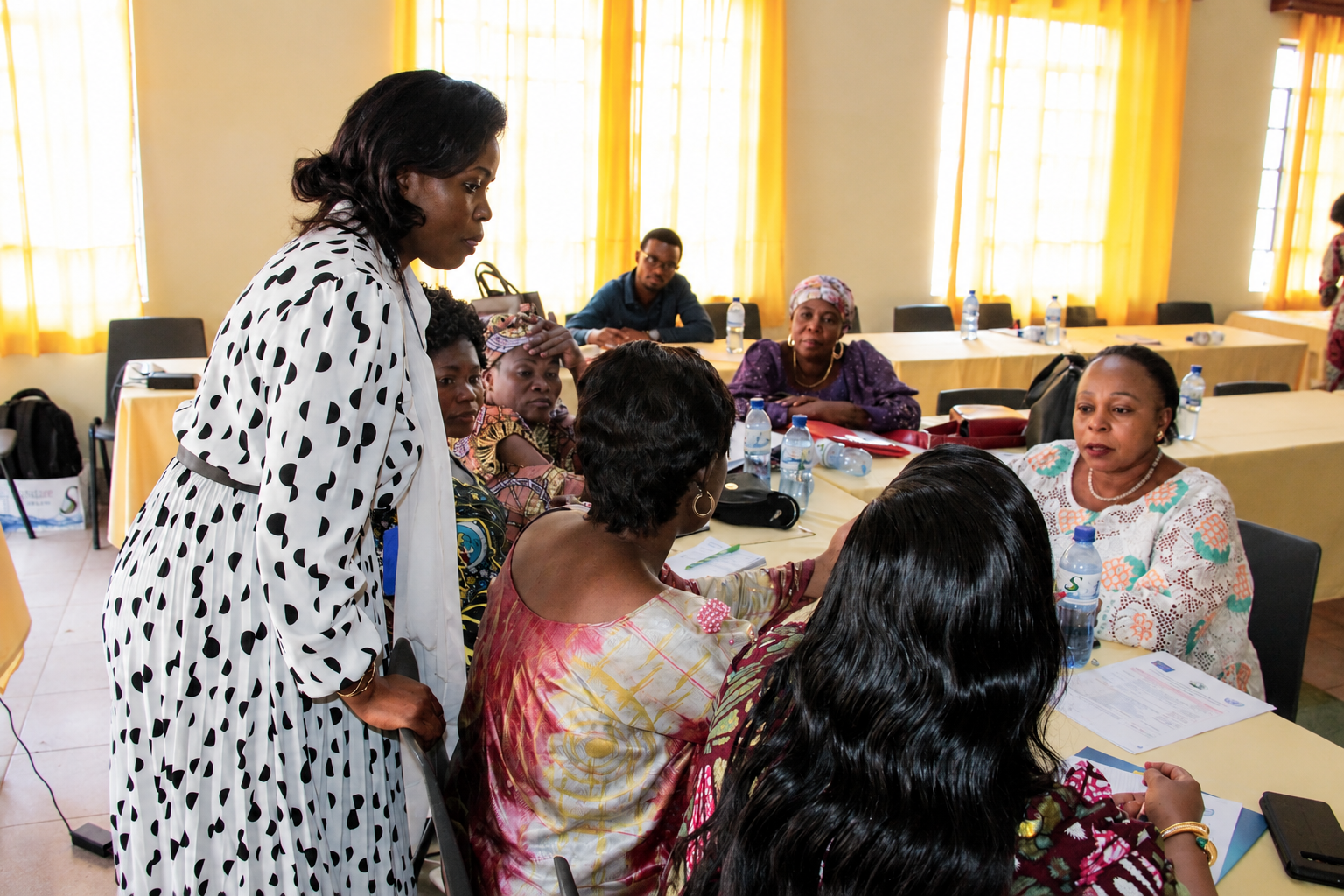
Working alongside the Independent National Electoral Commission, MONUSCO teams carried out outreach campaigns across South Kivu’s eight territories, engaging local authorities, women’s groups, youth organizations, and civil society actors on the electoral process.
Neema also helped organize political cafés and community outreach in Bukavu and Uvira, supporting women candidates and encouraging more women and girls to take part in politics. She contributed to Women, Peace and Security efforts in high-risk areas like Uvira and Kalehe.
Now based in Kinshasa with MONUSCO’s Regional Affairs Section, her focus has shifted to national and regional peace efforts. She works on political analysis, briefings and reports that support mediation and dialogue between Congolese, regional and international actors.
The context has grown tougher. As security in the eastern DRC worsened in 2025 and continues to worsen, evacuations, staff cuts, and rising pressure have reshaped the Mission’s work.
In this demanding environment, we had to strengthen our adaptability, resilience and sense of priority.”
Translating diplomacy across languages and crises
Inside the Office of the Special Representative in Kinshasa, peace work often comes down to something simple but critical: language.
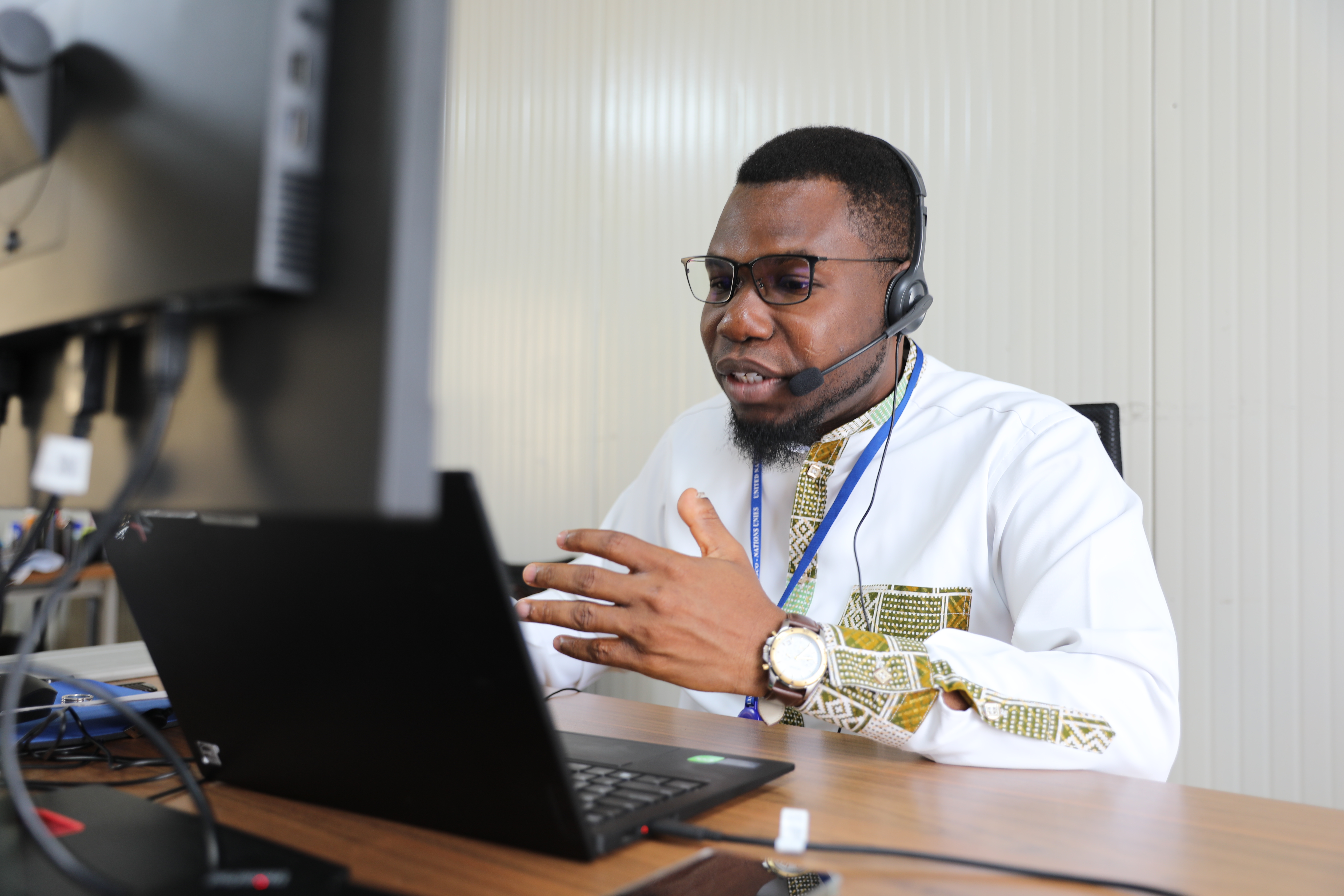
Appolinaire Fachehoun, a UN Volunteer from Benin, joined MONUSCO in March 2025 as an interpreter and translator. He translates reports and speeches and interprets during high-level meetings with political, humanitarian and operational actors.
Accuracy is key. Conversations often cover sensitive political and security issues, where a single misunderstanding can affect decisions.
One meeting, he especially remembers, was focused on the Right to Development. Government officials, civil society and development partners came together to discuss how to better reflect these rights in national policies. Working with other interpreters, Appolinaire helped make sure everyone—no matter the language—could take part fully in the discussion.
This experience reaffirmed the vital role of language in bridging gaps between policy and people, rights and implementation.”
Although Kinshasa is relatively stable compared to eastern DRC, the operational environment still carries challenges. Political demonstrations can quickly become tense, while traffic congestion, infrastructure limitations and unstable internet connectivity regularly affect movement and coordination. Appolinaire relies heavily on security briefings, careful planning and constant coordination with focal points and colleagues.
For him, volunteering is also about ensuring access to information in environments where communication itself can shape inclusion.
Meaningful change often starts at the community level,” he says. “International organizations rely on local voices, partnerships and community initiatives to inform their actions and priorities.”
Moving people through moments of uncertainty
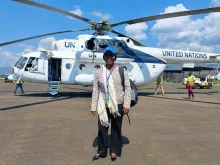
When instability surged in Goma, transport operations shifted into emergency mode. For Makki Gedoum, a UN Volunteer from Sudan, the following weeks were intense. He helped manage evacuations for staff and their families across several UN organizations, working through uncertainty and constant movement. Flights arrived at unusual hours—from late morning to early dawn—and transport teams kept going despite staff shortages.
The department operates 24 hours a day and suffers from a severe staff shortage,” he says. “During the evacuation, flights arrived between 11 a.m. and 6 a.m. It was a difficult challenge, but we managed.”
In normal times, Makki coordinates airport pickups, schedules and transport for new arrivals. In moments like these, that work becomes critical to keeping operations going. For him, the role is about connection across the mission. “Communication and transportation are fundamental to any work,” he explains. Like many UN Volunteers in the DRC, he sees volunteering as both a job and a learning experience—built by teamwork, different cultures and the need to adapt every day.
Different roles, same reality: peace runs on work you rarely see—analysis that anticipates tensions, interpretation that makes dialogue possible, logistics that keep everything moving.
It happens quietly. It doesn’t make headlines. But without it, the mission stops—and so does the fragile progress it supports.