



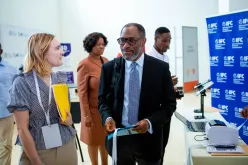
When Alissa Ditten arrived in Accra from Switzerland, she expected to support operations. What she didn’t anticipate was how quickly her role would expand beyond it. Based within the Country Management Unit, Alissa's UN Volunteer assignment is funded by Switzerland and based in Ghana with the International Finance Corporation (IFC). Her days move between research, coordination, and communication—often within the same stretch of time.
That dual positioning has given her a front-row view of how projects are developed. In her role of UN Volunteer Operations Analyst, she balances operations and communications. “This mix is quite exciting,” she says. “It really helps me go in-depth about IFC’s work, our projects and the impact we’re making.”
Let's hear more from Alissa.
Some of the most demanding parts of her role are not immediately visible. Translating technical investment programmes into clear, accessible language requires more than accuracy—it requires judgment.
“It’s not always easy to break those down and explain them in a simple way,” Alissa explains.
Staying closely connected to technical teams has become essential, allowing her to refine messages and avoid misinterpretation. It is a continuous process of alignment—one that ensures communication reflects reality without oversimplifying it.
Impact, in this context, is not always easy to quantify. “It’s sometimes hard to put it into exact numbers,” she says. Still, the effects are tangible. Content she has developed for senior leadership has gained media attention, helping shape conversations around IFC’s work in Ghana.
Through this work, which also includes IFC events, she contributes to a broader objective: supporting economic growth through private sector development. In a country where job creation remains a critical issue, that connection matters.
“At its core, IFC is about creating opportunities and supporting sustainable businesses,” she notes.
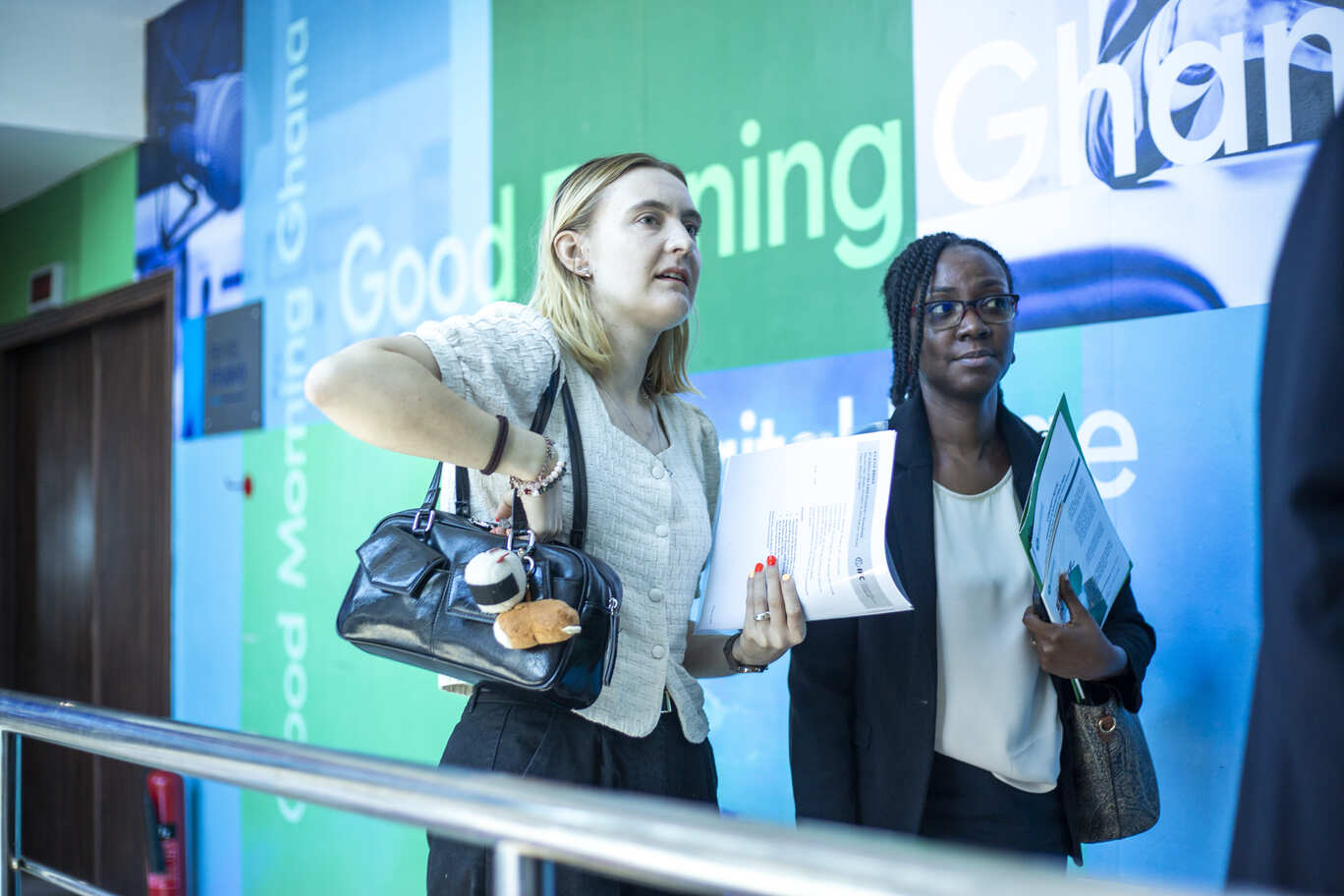
“Alissa quickly adapted to the Ghanaian working environment, building strong relationships across the team and contributing effectively to both operational and communications work.” Awuiteba Atengdem, Communications Lead, IFC.
Living and working in Ghana has reshaped how she understands development. One lesson stands out: context changes everything. Success means navigating shifting timelines, complex priorities, and high expectations—all while adapting to local realities.“What might seem like a straightforward idea in one country doesn’t always work elsewhere,” she reflects.
Policies, cultural norms, and economic realities all influence outcomes. Being on the ground means adapting constantly—moving away from assumptions and responding to what is actually there.
“Being a UN Volunteer means contributing your skills, but also committing to adaptability and shared responsibility,” Alissa says.
That perspective is especially relevant in a context where development work faces increasing constraints. Funding cuts have real consequences. They slow progress and limit scope.
But they do not stop the work. “What keeps things moving is the diversity of skills and collaboration across teams,” she adds.
Her experience reflects a simple truth about development: impact is not always visible and rarely happens overnight. More often, it is built through steady effort—connecting people, shaping messages, and strengthening the systems that help projects succeed.
For those considering a career in international development, Alissa offers a simple reminder: behind every institution are people working to create change. Her journey reflects that reality.
As the first UN Volunteer deployed with the IFC in Africa, she represents a growing recognition that volunteer expertise has a place at the heart of institutions driving economic development.
The IFC, part of the World Bank Group, supports businesses in over 100 countries with financing and advice to help them grow and create jobs. For more information about UNV's Full Funding programme and the Special Voluntary Fund, click here.