



I was born and raised in Kharkiv, Ukraine—a city I loved very much. At 16, my life revolved around school and my passion for archery. But in 2014, everything changed. War crept closer to my home, filling the air with uncertainty and fear. It became clear that it wasn’t safe to stay, so I made the tough call to move to Poland. The hardest part? Leaving behind my anchor—my family. Their support was everything. But suddenly, that support system only existed through a screen. No more warm hugs, no more shared meals, just phone calls and messages that never quite replaced their presence.
When I first arrived in Poland, I felt alone, as if I had stepped into a world where I didn’t belong. The language barrier made everything more difficult—making friends, understanding lessons, and even simple conversations. I was afraid to speak, afraid people would laugh at my mistakes. But when I finally worked up the courage, I was met with kindness. People didn’t mock me; they encouraged me. This gave me the motivation to keep learning, to keep trying, and to believe that I could find my place in this new world.
As a Ukrainian migrant, I know firsthand how important support is, especially for young people navigating the unknown. I applied for the UNICEF Youth on the Move programme because I wanted to be part of that support system for others. I started my UN Volunteer assignment in November 2024 as an Adolescent and Youth Development Assistant at the UNICEF Refugee Response Office in Warsaw.
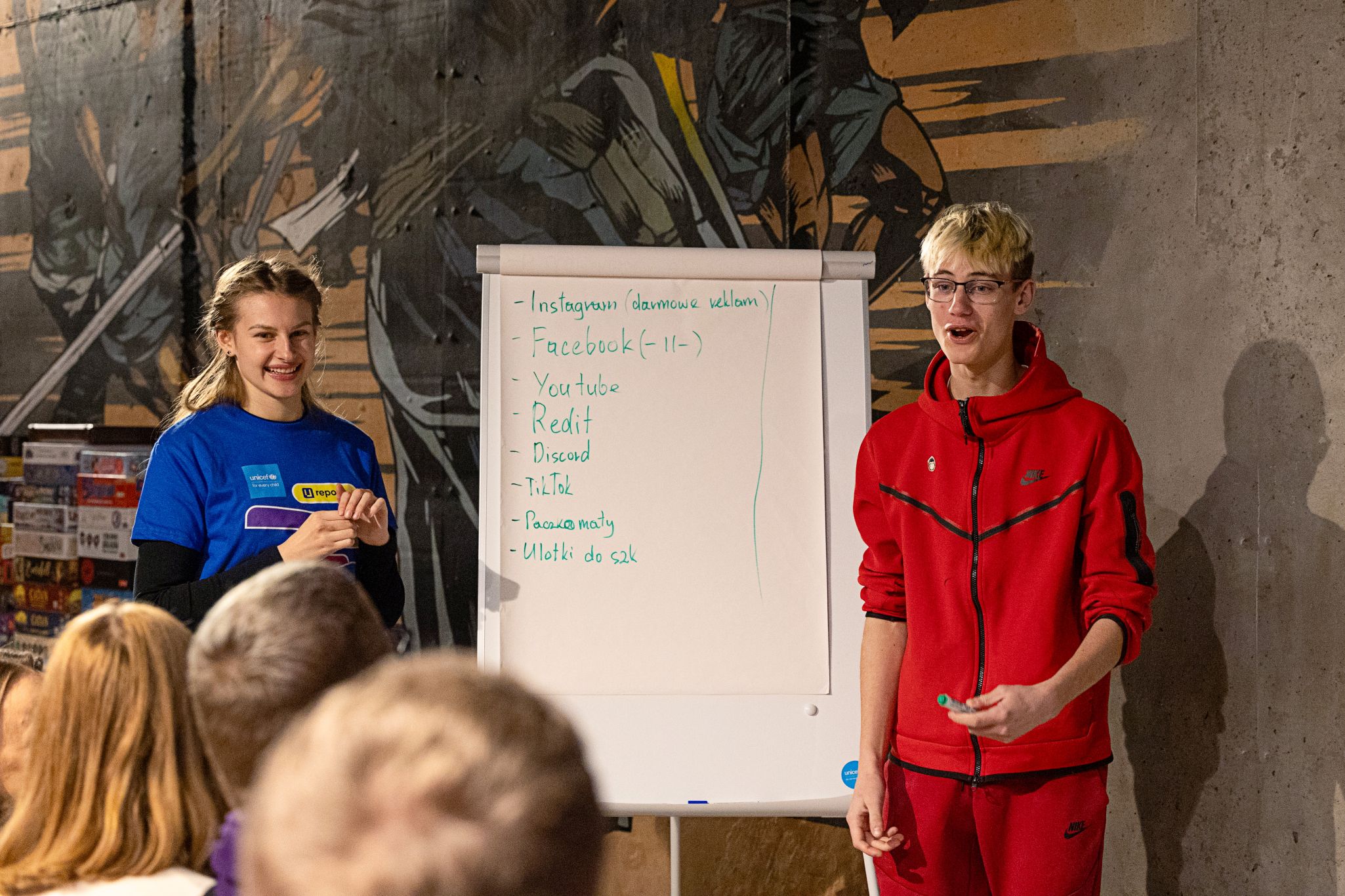
Speaking multiple languages allows me to connect with young migrants, understand their struggles, and help create opportunities that empower them. No one should have to feel alone on their journey. One of the most rewarding moments was seeing the real impact of our work through the UPSHIFT programme in Poland. UPSHIFT supports teenage students in building practical skills and making connections in Polish schools.
After the programme, adolescents shared how the experience had changed them—how they’d gained new skills, new confidence, and a sense of direction. Knowing that our efforts were making a positive change in their lives made me incredibly proud. It wasn’t just about implementing a project; it was about giving young people the tools to build their future.
I remind myself that I have the power to make a difference—not just in my own life, but in the lives of others. I’m not alone in this journey; millions of migrants face similar struggles. It’s all about perspective.
Instead of letting challenges break me, I choose to see them as opportunities to become stronger. I’ve learned that resilience is everything. As a migrant, life is full of obstacles, but each one teaches you to adapt, to push forward, and to believe in your own strength. Giving up is not an option.
I carry my culture with me. I hold on to my family’s customs and traditions, even though I have to adapt them to my new reality. Some things, like family gatherings, aren’t the same from afar. But I’ve found new ways to keep the spirit alive—like celebrating with friends who have become my second family.
My biggest dream is peace—an end to war and safety for my family. Professionally, I want to expand my work in non-formal youth education and create more opportunities in both formal and non-formal settings to help young people around the world gain the confidence they need to tackle their challenges. I want to create spaces where they can learn, grow, and build a future full of opportunities—just as I once needed someone to do for me.
Young refugees and migrants should not only be seen as individuals in need but as capable leaders and changemakers.
On World Refugee Day, my message is: Uplift youth voices—don’t just listen! Create platforms where young people lead the conversation and shape the future. Policies and programmes must not only include youth—they must be built with them.