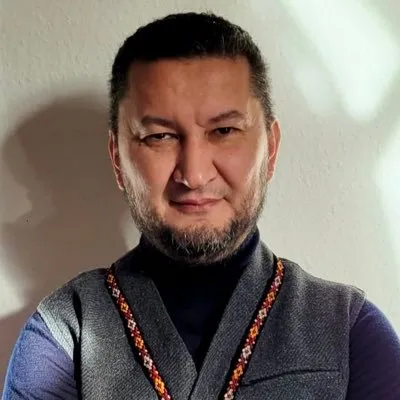
Executive Coordinator presents the UNV Strategic Framework to the Executive Board

Toily Kurbanov, Executive Coordinator of United Nations Volunteers (UNV) presented the Strategic Framework 2026-2029 to the Executive Board in New York on 5 February 2026. The Executive Board consists of the United Nations Development Programme (UNDP), the United Nations Population Fund (UNFPA) and the United Nations Office for Project Services (UNOPS).

I thank you, Mr. Chair and the Associate Administrator, for the invitation to present the UNV Strategic Framework. Before I begin, I would like to request the Secretariat to introduce a short video for the delegates, please.

I thank the Secretariat, Mr. Chair, distinguished delegates.

What you have just seen captures the essence of this Strategic Framework.

What measuring volunteerism really tells us about progress

For more than two decades, development policy and practitioners have returned to the same unresolved question: how do we measure volunteering in ways that make it visible without losing sight of what it truly is? 

Working together with the team of researchers on the 2026 State of the World’s Volunteerism Report (SWVR) “Volunteerism and its measurements”, as well as listening to governments, practitioners and volunteers around the world did not resolve that question for me. Instead, it sharpened my understanding of why it sits at the heart of broader debates on how we define progress. What is the value people create for each other and for society every day?

In line with the UN Secretary-General’s Our Common Agenda, the discussion reflects growing efforts to complement Gross Domestic Product (GDP) with measures that better capture wellbeing, social cohesion, and sustainable development. Volunteerism sits squarely within that gap between what matters and what is measured. However, volunteering, mutual aid, and civic participation are largely absent from traditional economic metrics.

Preventing violent extremism before it starts

Preventing violent extremism begins long before violence occurs. It means building trust, listening to communities, and ensuring young people and women can take part in decisions that affect their lives.


UN Volunteers help turn these principles into action by working directly with communities, local leaders and national institutions. They support mediation, peace education, early‑warning efforts and local initiatives that build trust and resilience. 

What happens when no one is out of reach?

Physical and social isolation remain some of the toughest barriers to development. Whether caused by rugged terrain, digital divides, fragile infrastructure, or persistent violence, these separations cut people off from the opportunities they need to shape their futures. Yet every day, volunteers step into these gaps. They connect people through simple, human‑centered relationships that rebuild trust, spark collaboration, and help communities chart their own path forward.

In Zambia, the digital divide tells a broader story of exclusion. National networks continue to grow, but communities outside urban centers are often left at the margins of digital society and the modern economy. Women, young people, and older generations frequently feel this disconnect most acutely.

Built to sail: Four years of the Unified Volunteering Platform

A ship in harbour is safe, but that is not what ships are built for,” wrote John A. Shedd. Like any well-built ship, the true measure of a digital platform emerges only once it has navigated demanding conditions. The United Nations Volunteers (UNV) marks four years since the launch of its digital hub, known as the Unified Volunteering Platform (UVP) in October 2021. Designed as a reliable vessel for volunteering, the platform has proven its real value by successfully steering through choppy waters.

Over the past four years, the United Volunteering Platform has operated at a global scale, responding to continuous demand, evolving requirements, and operational challenges. Through it all, the platform has remained steady—adapting, improving, and growing stronger with every upgrade and every piece of feedback. 

Multiplying hope on the frontlines

When crises hit—whether through war, disaster, or displacement—it’s not just infrastructure that collapses. Systems fracture. Communities scatter. The sense of safety disappears. In those moments, what holds the response together isn’t perfection, it’s presence. Across some of the world’s hardest hit places, from Sudan to Afghanistan to the Democratic Republic of the Congo, UN Volunteers have shown that effective emergency response begins with people on the ground: people who understand local realities, who act quickly, and who help communities move from shock toward stability. Under the UNV Strategic Framework 2026–2029, this frontline presence is not only preserved but strengthened. 

A safety net and network multiplier